
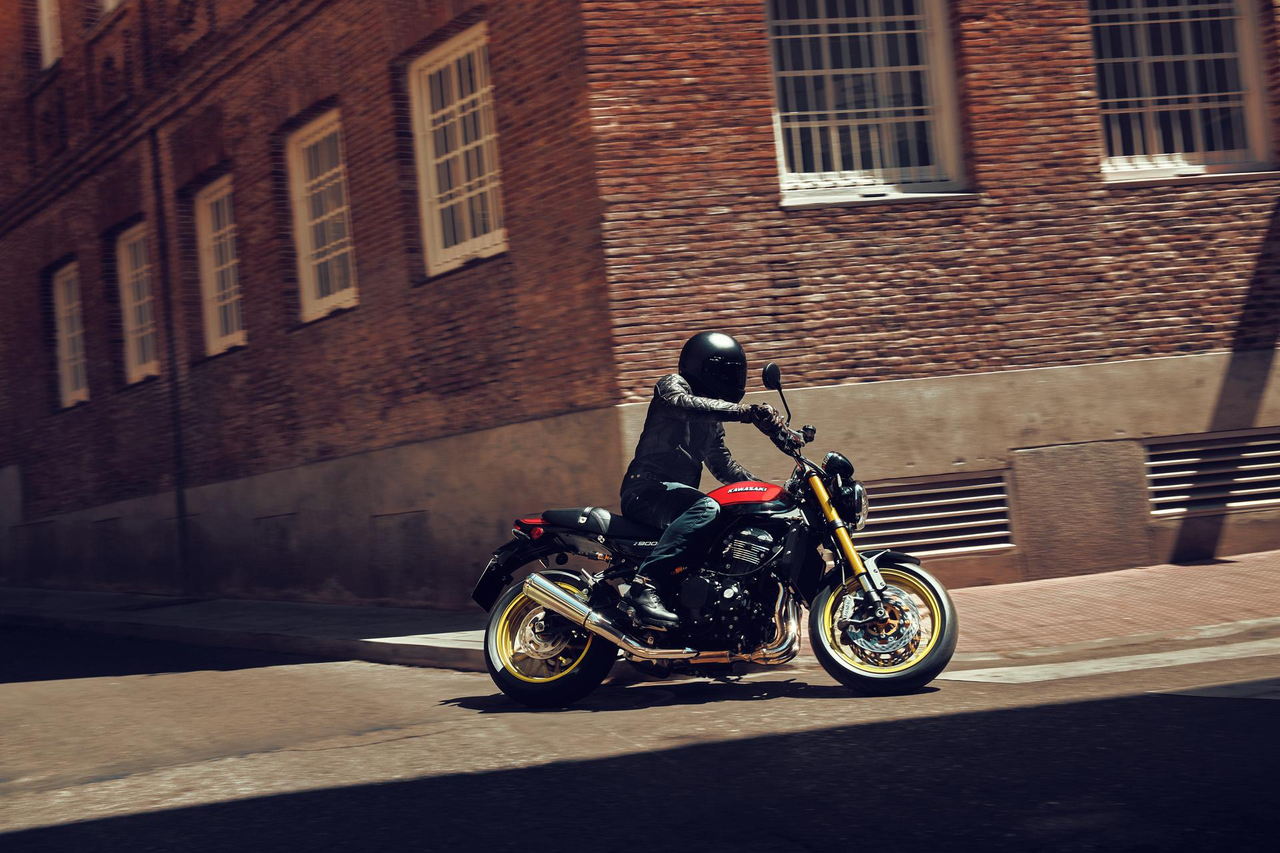
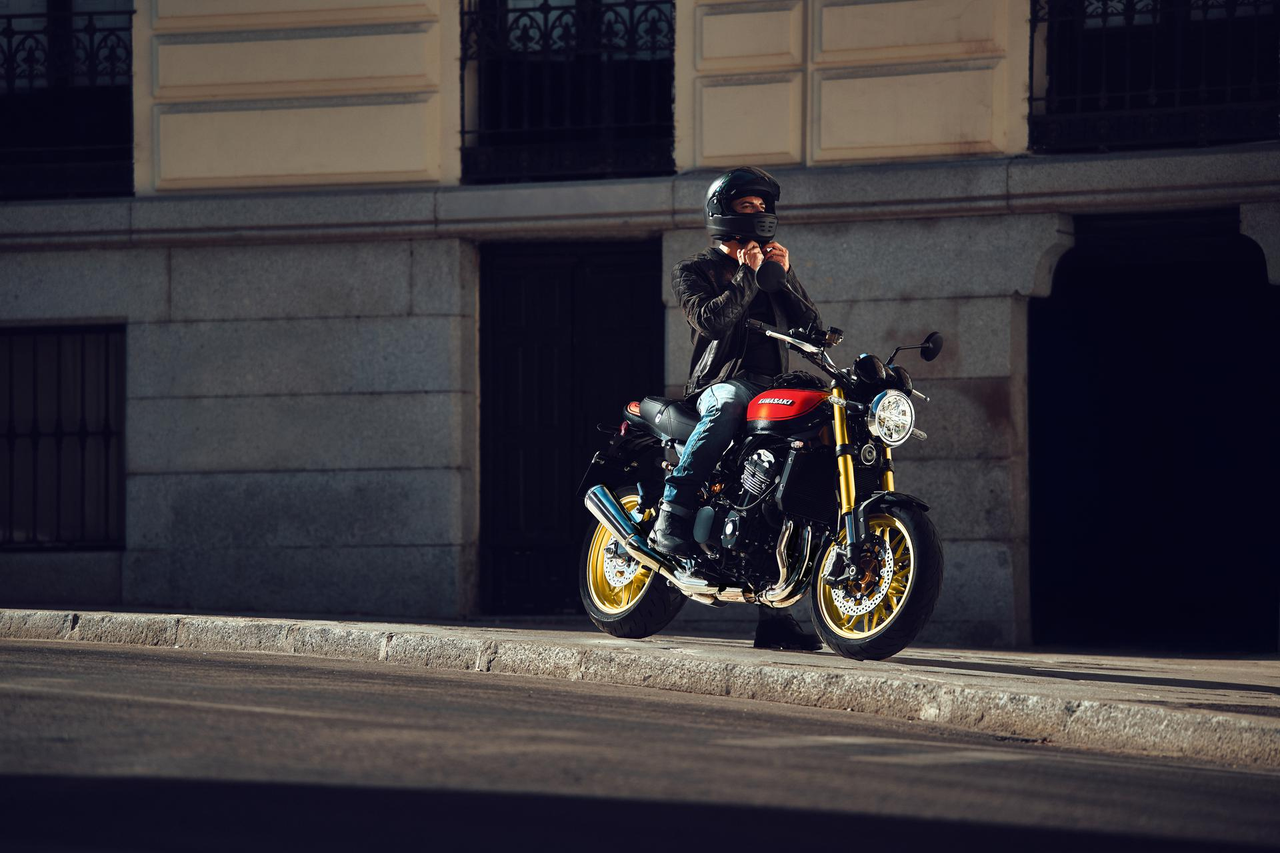
Inpage Navigation Section: Overview
New 2027
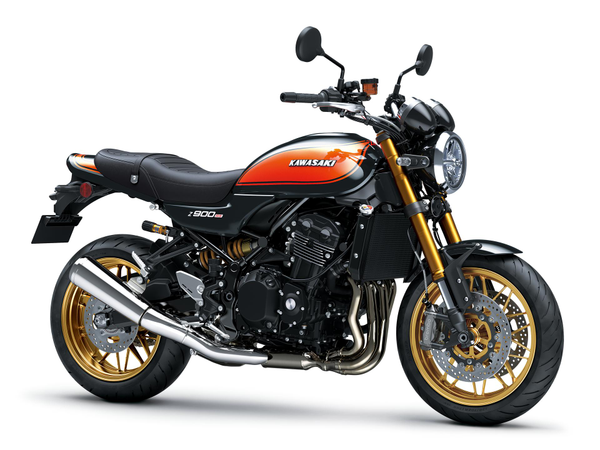
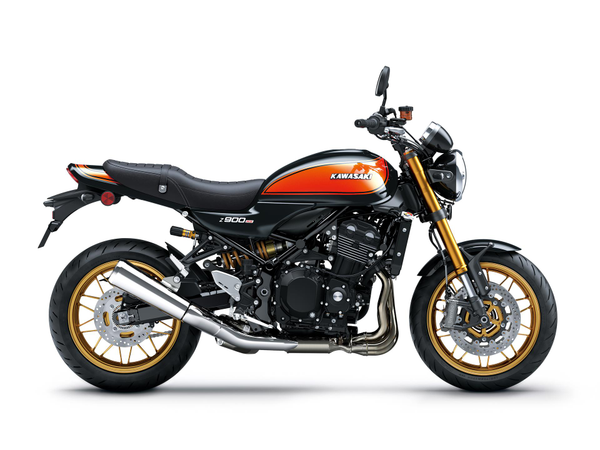
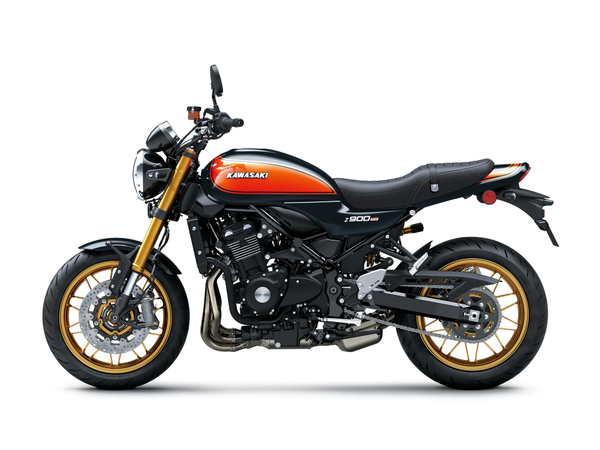
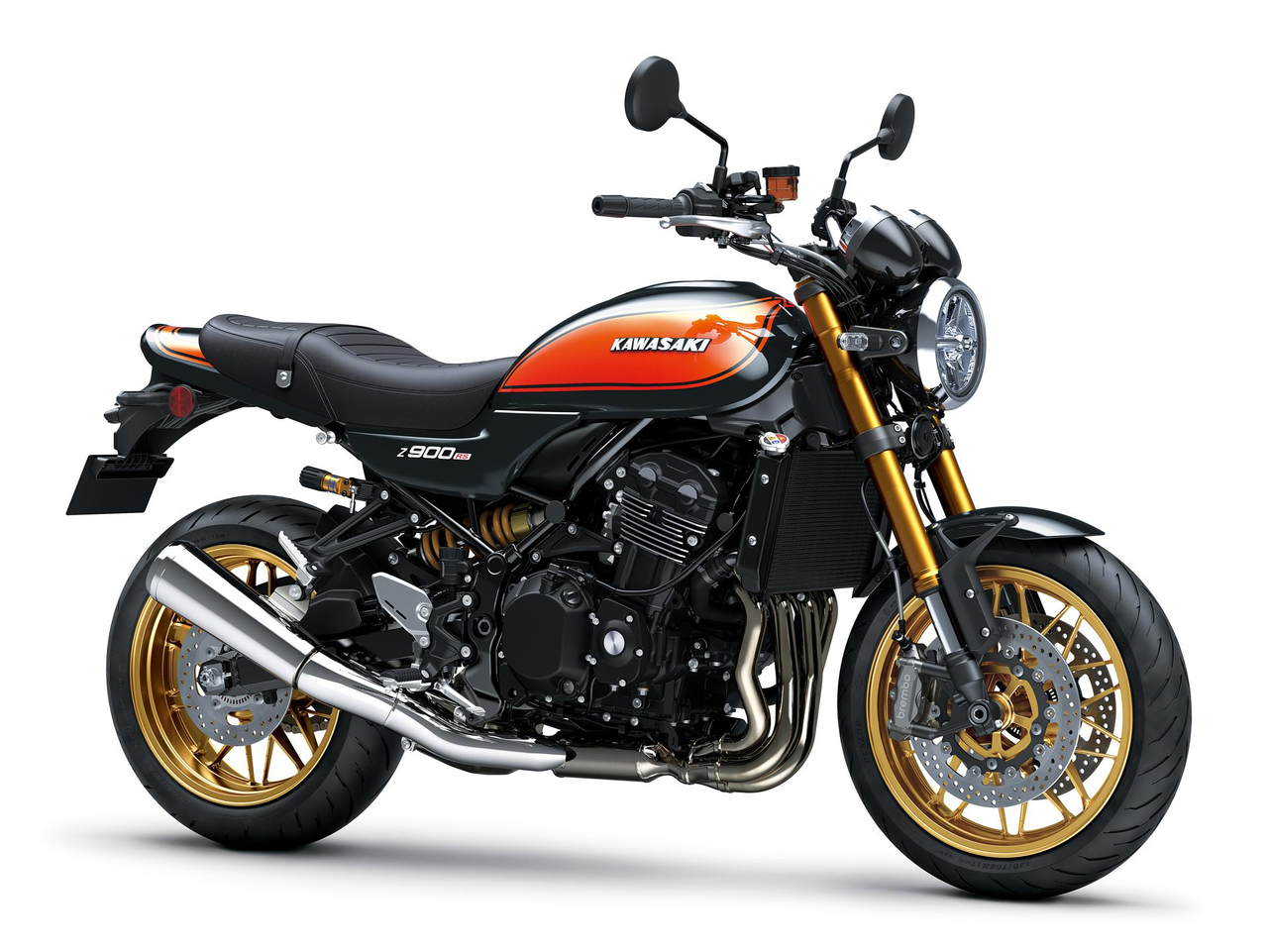
Z900RS SE
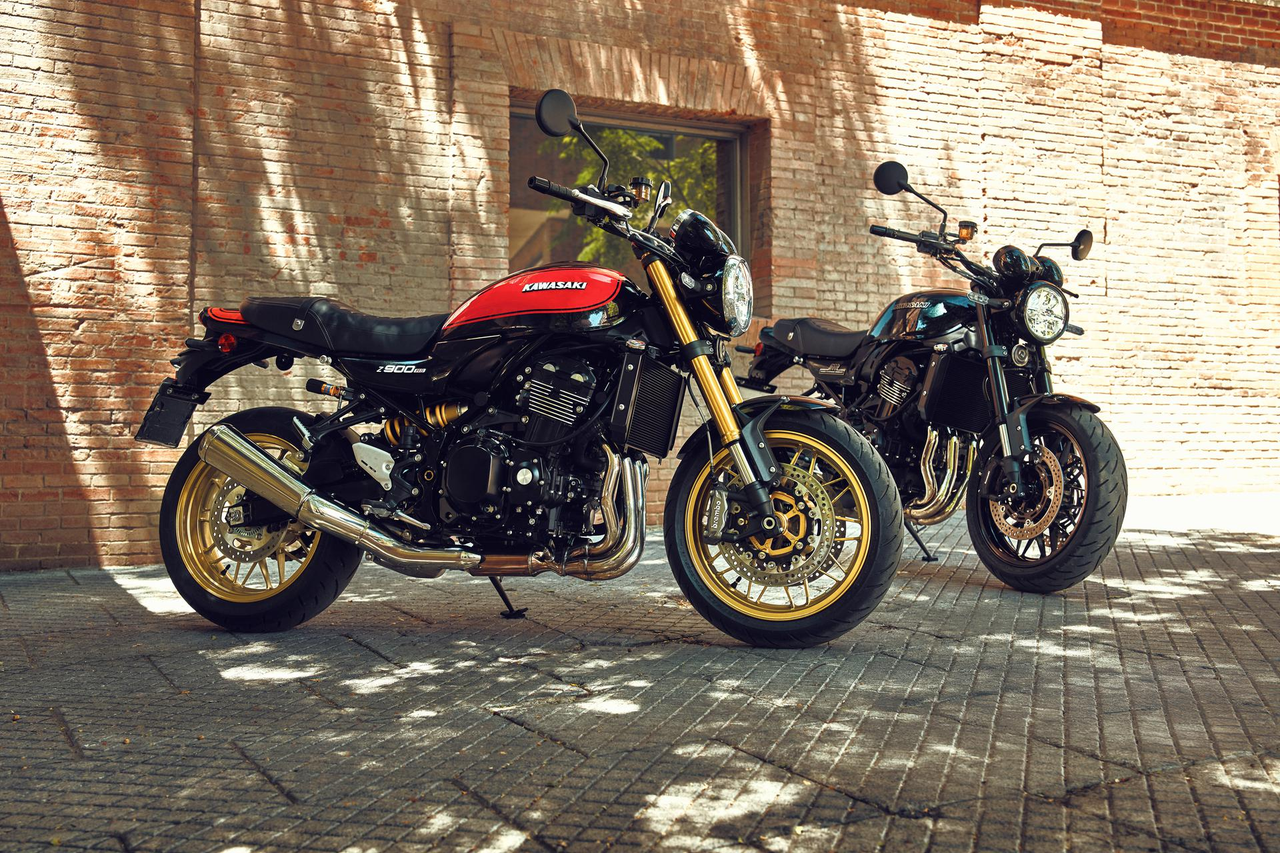
Past & Future Meet in the New Z900RS
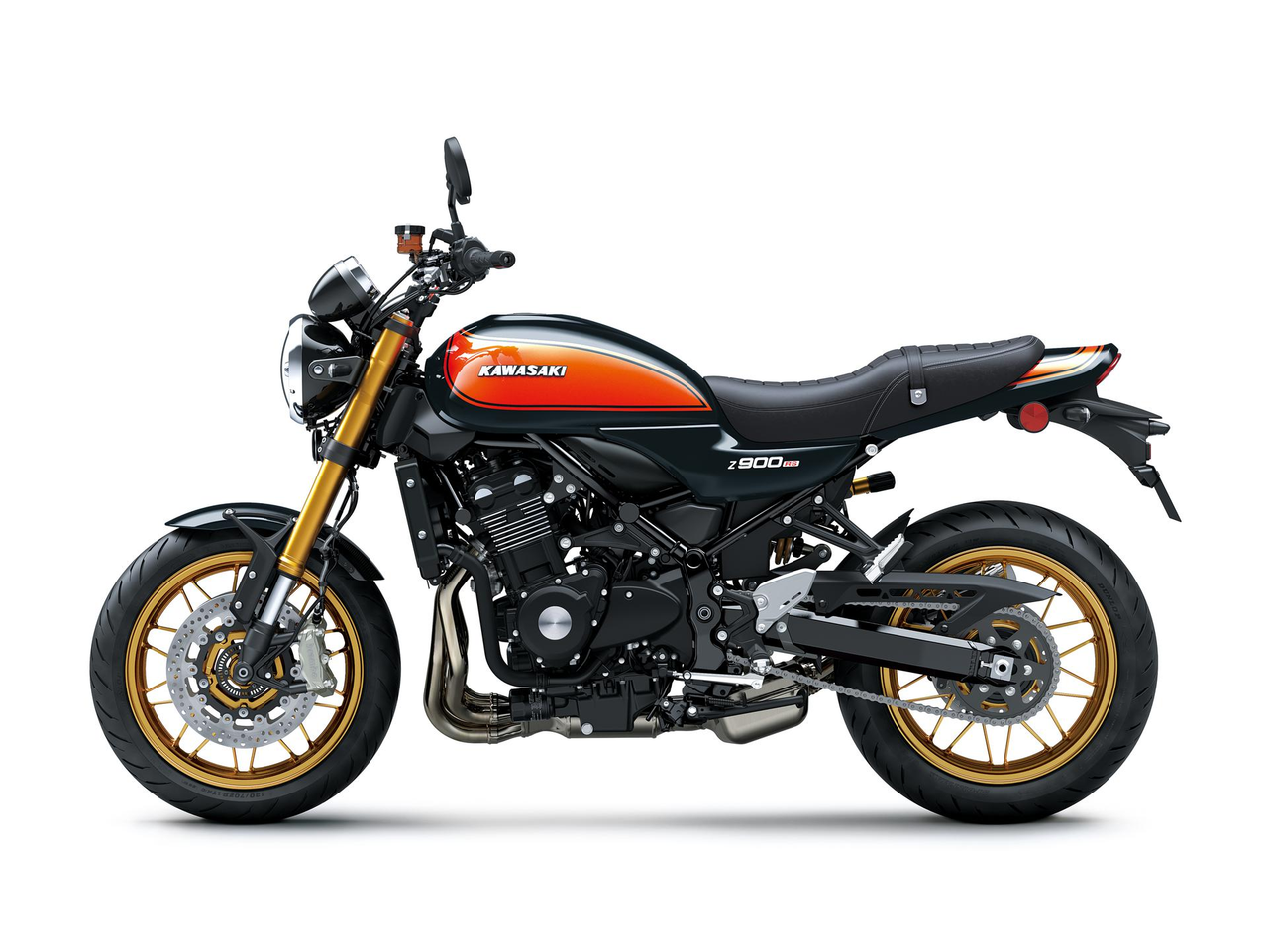
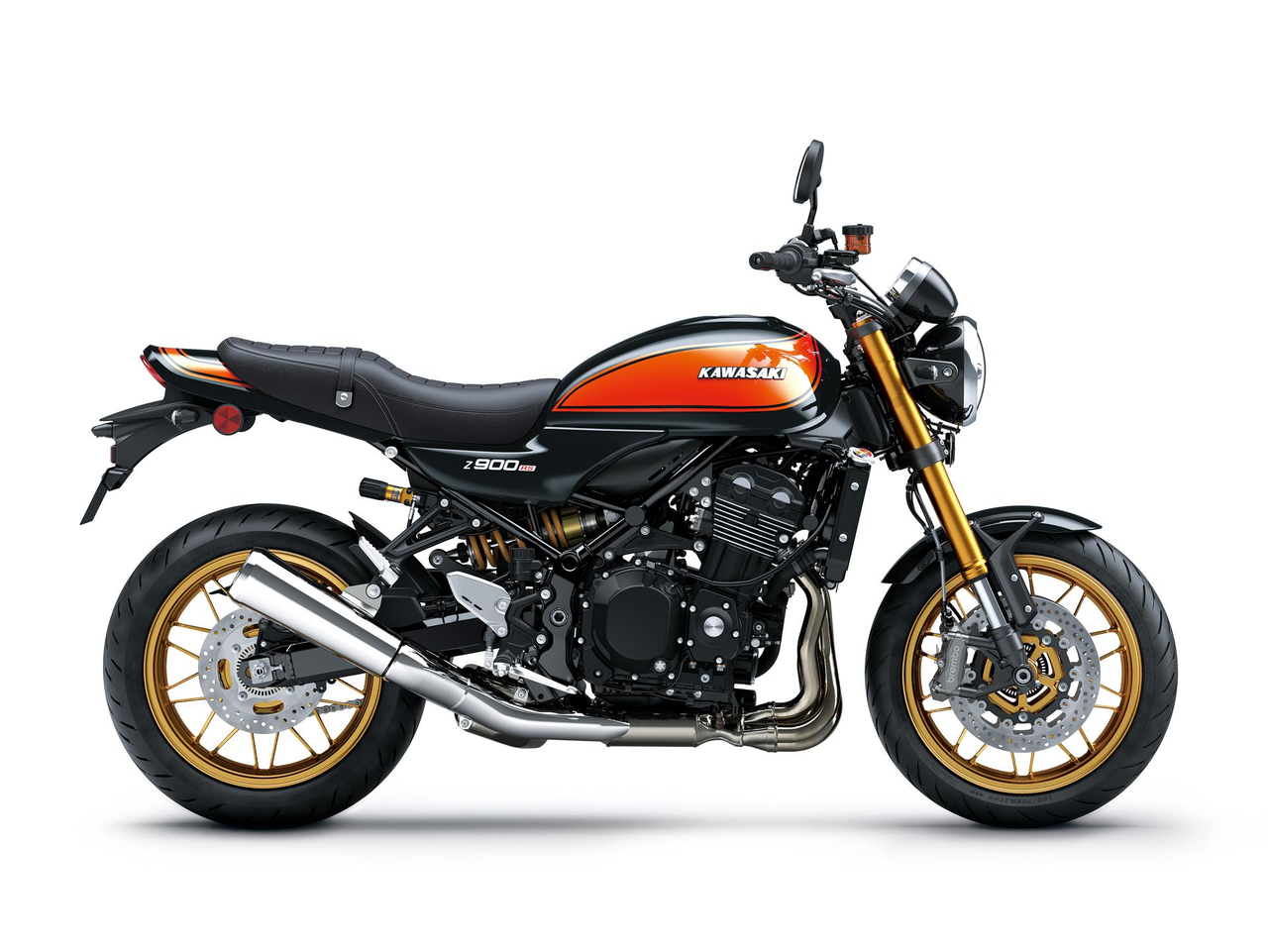
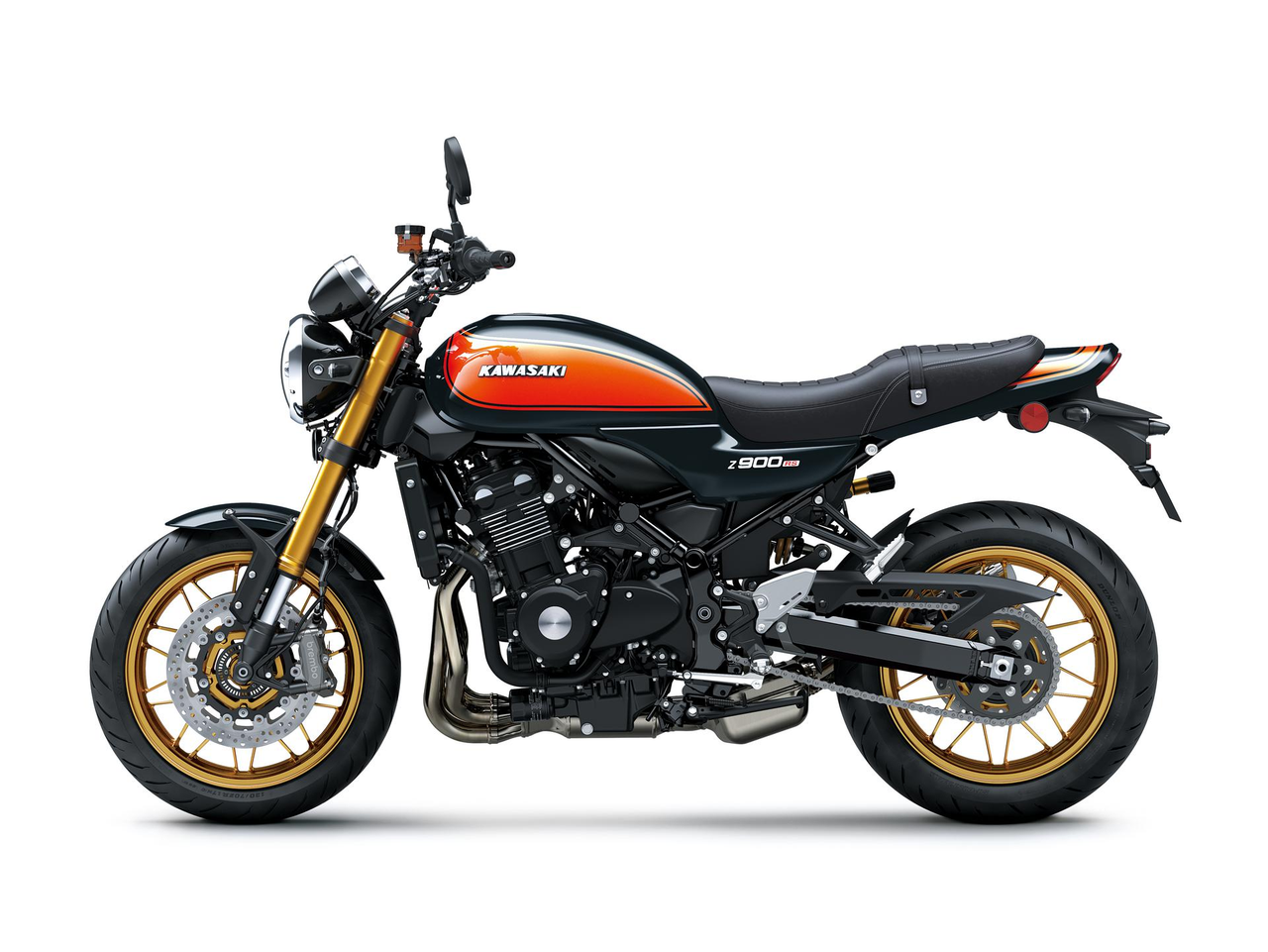
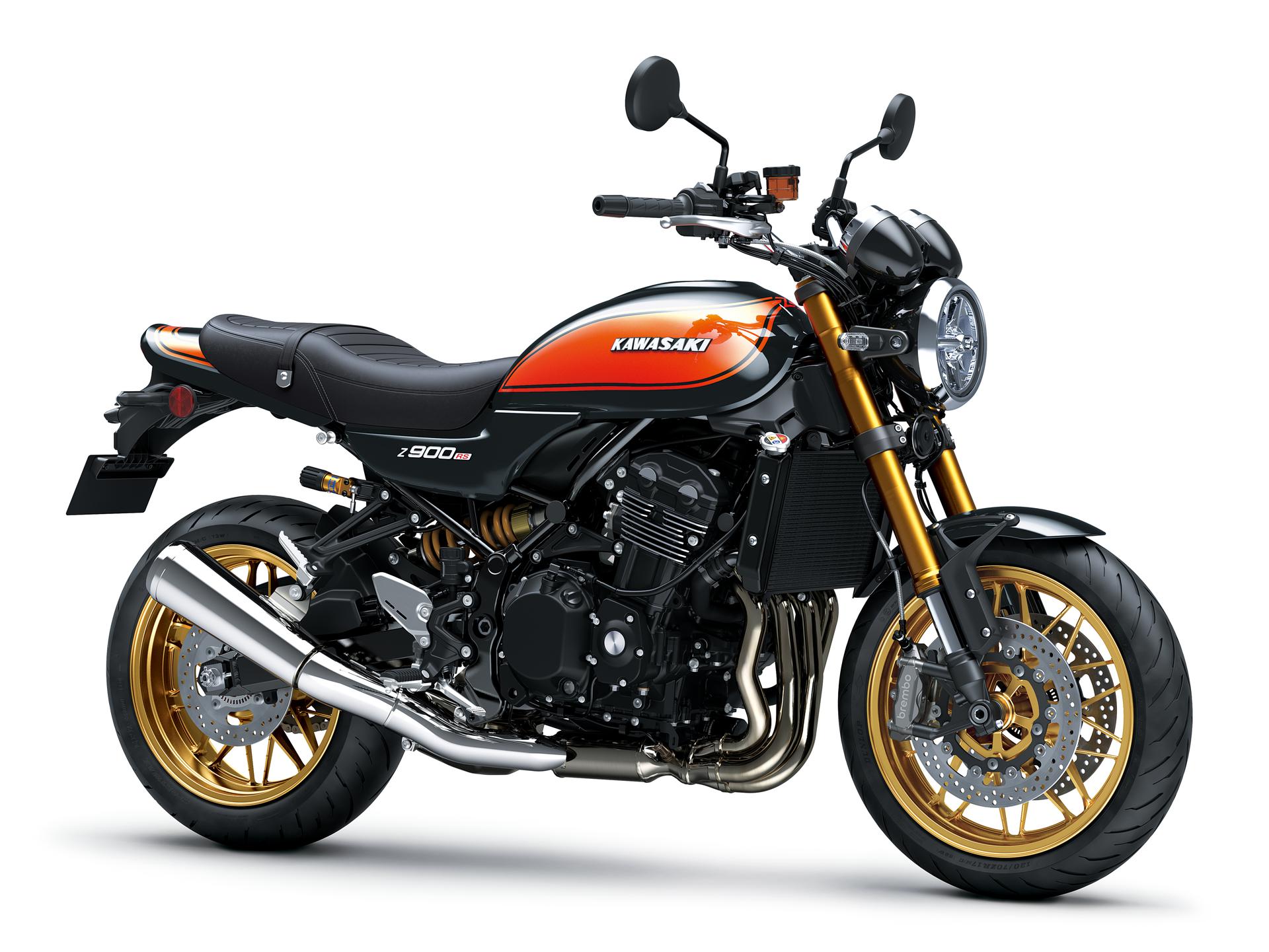
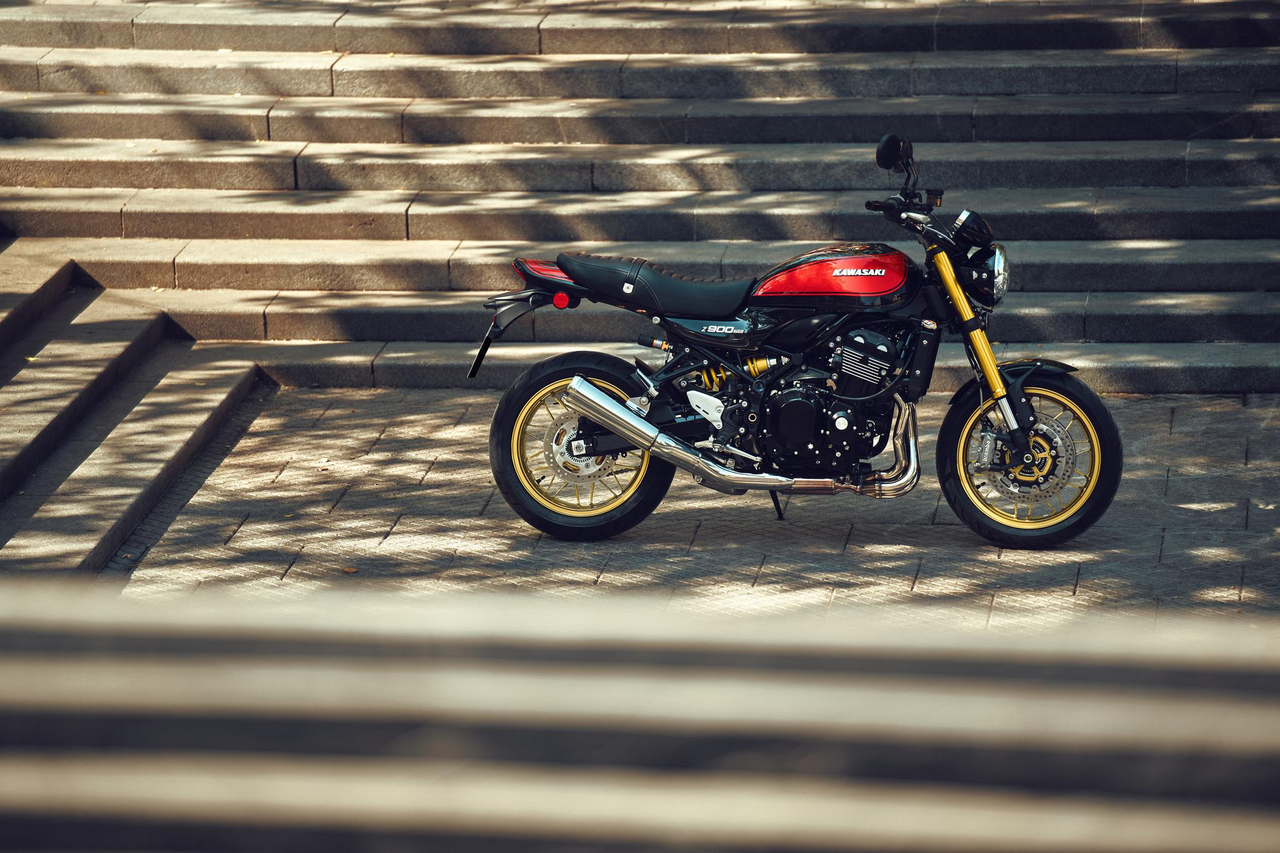
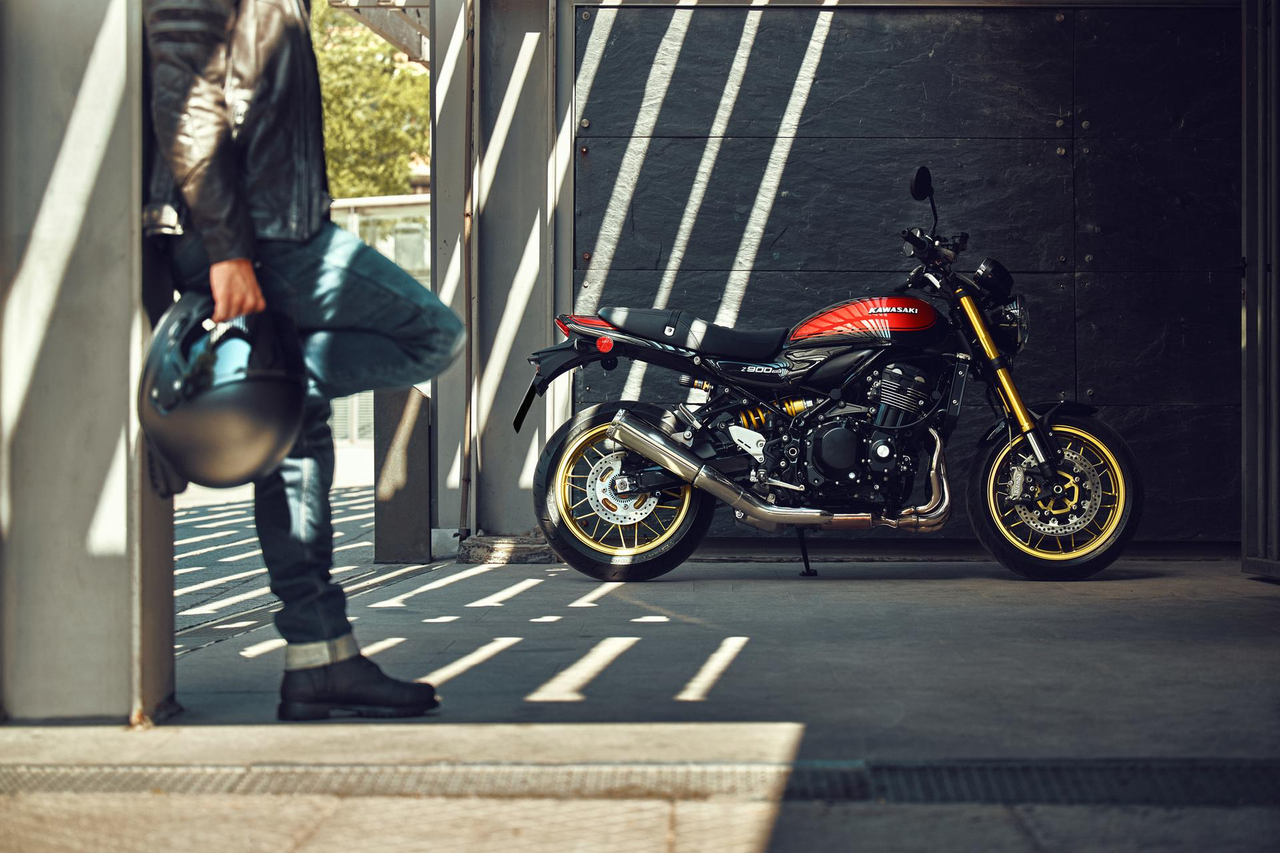
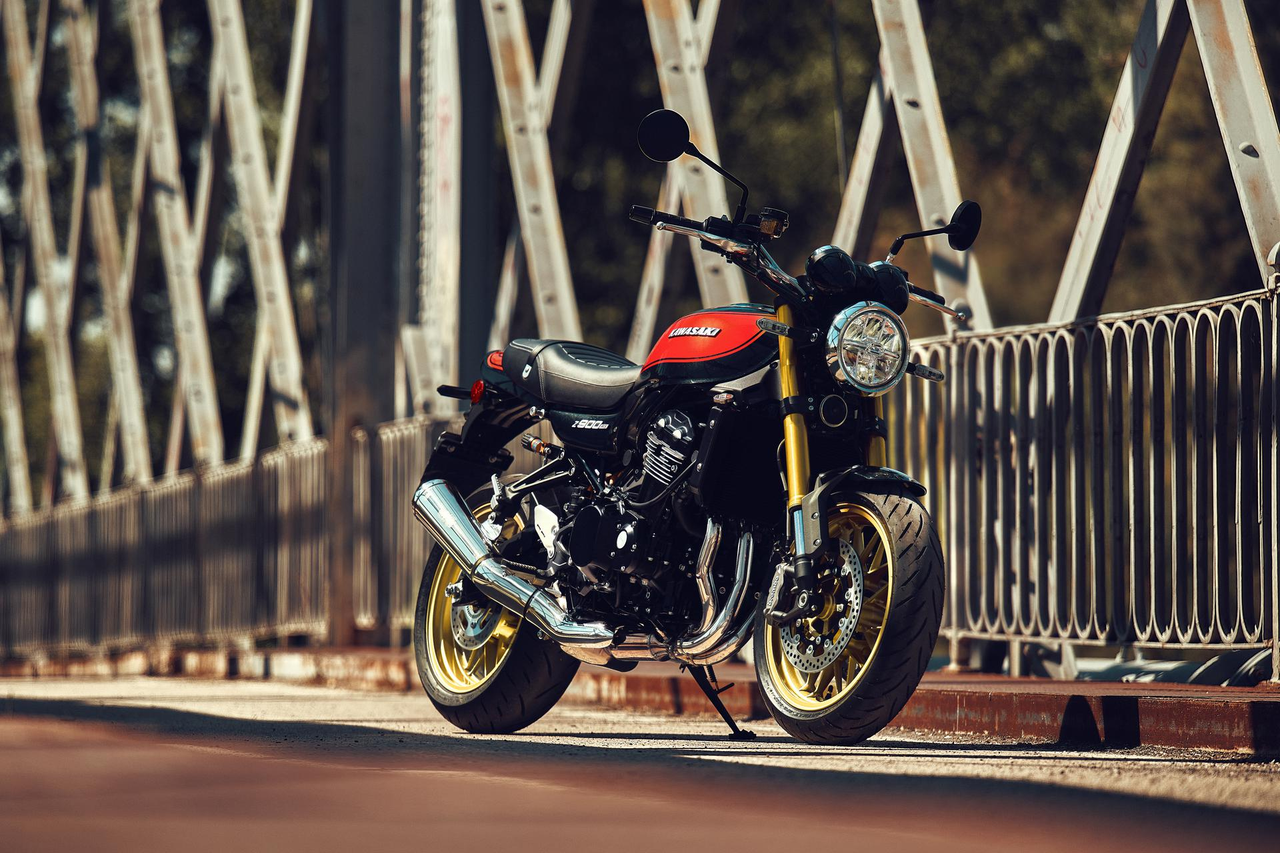
Inspired by the iconic Z1, the Z900RS reimagines details for a new riding era, such as the vintage-style comfort low seat, analogue dials, and sporty “sound-tuned” megaphone-style silencer, while adding modern craftsmanship in every area.
From electronic cruise control and smartphone connectivity to the IMU-equipped rider support package that includes Kawasaki Cornering Management Function (KCMF) and Kawasaki Quick Shifter (KQS), this is an engine tuned for smooth performance at low rpm and greater excitement at higher revs, joining innovations designed to enhance rider comfort and sheer riding pleasure.
This is not just a motorcycle; this is the embodiment of Retro Sport.
Z900RS – Legends never end; they grow, evolve, and endure.
Colour
Edition of Z900RS SE
$23,923.00
Inpage Navigation Section: Gallery
- asset0
Inpage Navigation Section: Features & Specs
- Features
- Technologies
- Specifications
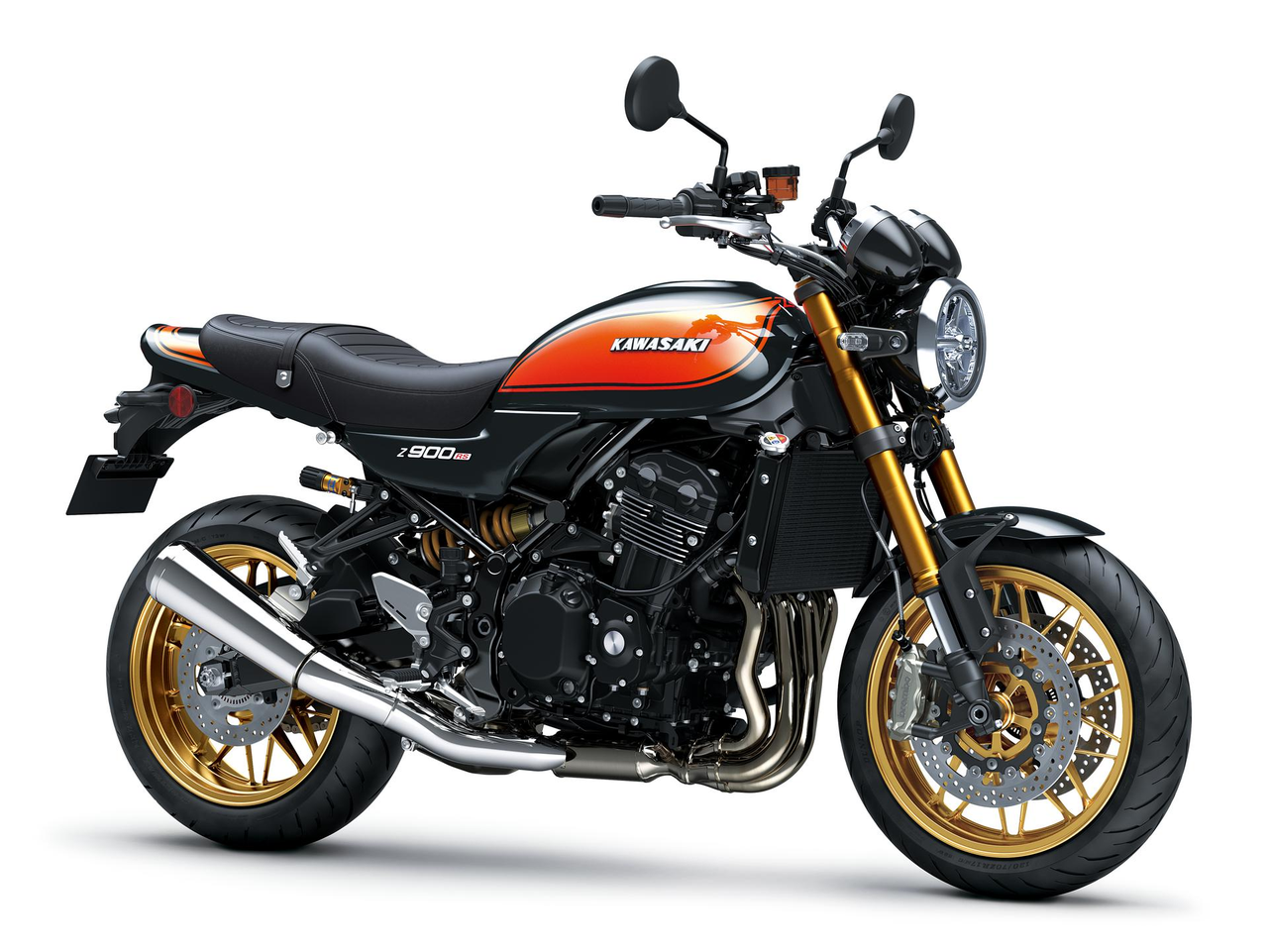
Timeless Styling
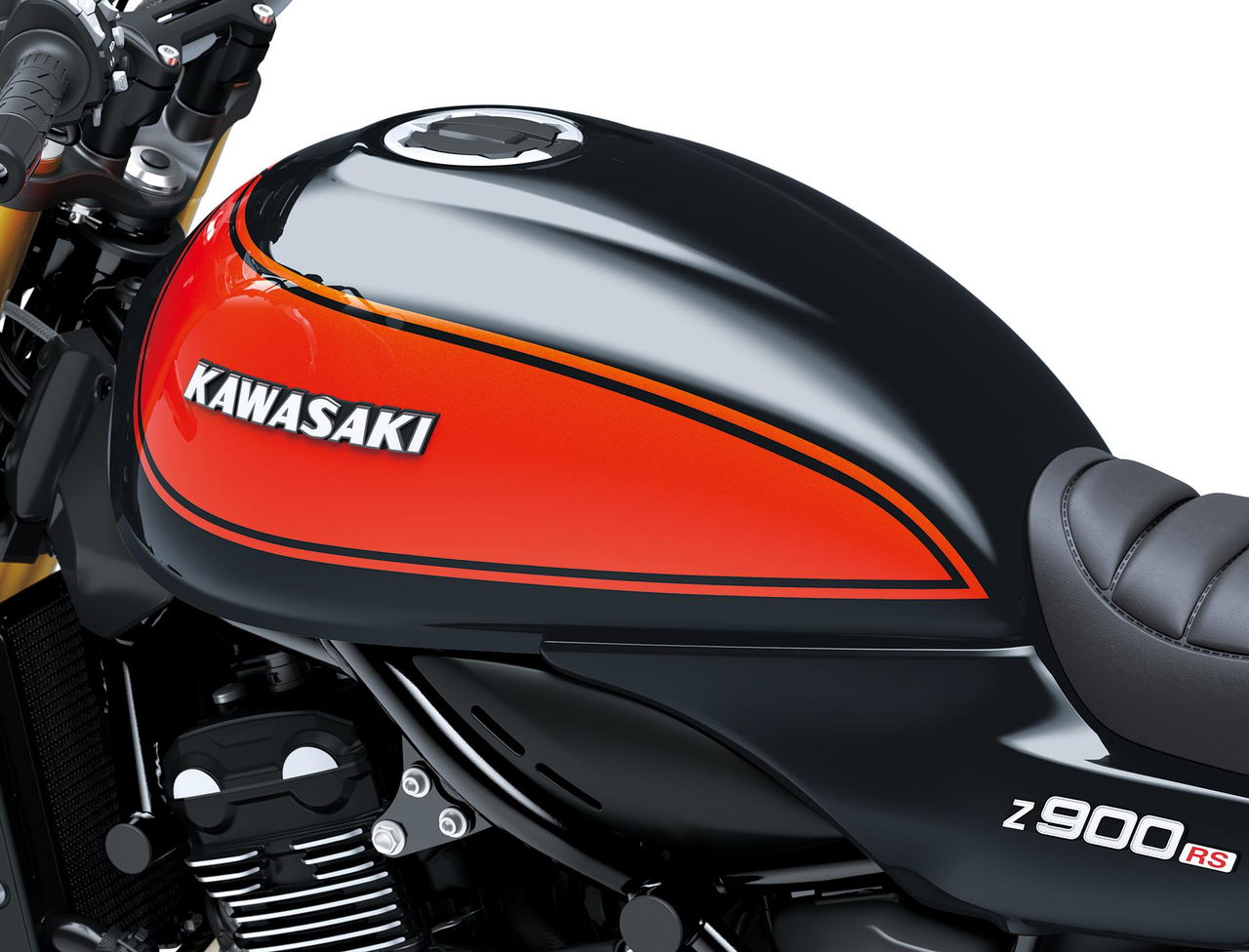
With a seamless blend of Z1-inspired styling elements and modern craftsmanship—from the iconic teardrop fuel tank to the innovative oval LED taillight—the Z900RS offers timeless good looks with an exquisite attention to detail and superb fit-and-finish that results in a very high-quality appearance. Functional beauty was a priority, with a simple, yet refined design pursued.
Timeless Styling
With a seamless blend of Z1-inspired styling elements and modern craftsmanship—from the iconic teardrop fuel tank to the innovative oval LED taillight—the Z900RS offers timeless good looks with an exquisite attention to detail and superb fit-and-finish that results in a very high-quality appearance. Functional beauty was a priority, with a simple, yet refined design pursued.
Synchronous Ride Feel
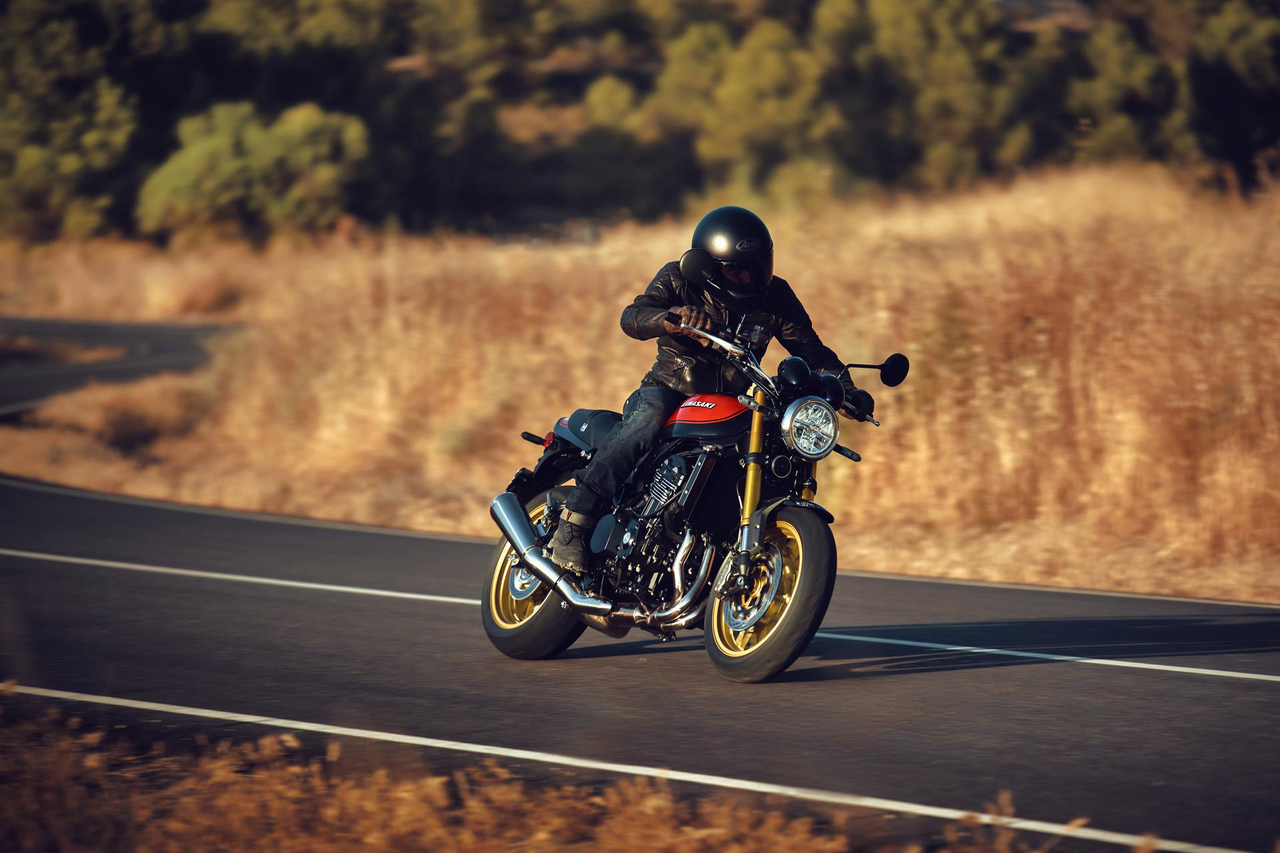
Thanks to its smooth In-Line Four, and unhurried handling care of its lightweight trellis frame, the ride feel of the Z900RS is unique in the retro category. Both engine and chassis response were carefully designed to not be too quick, making it easier to feel at one with the bike. The resultant stress-free riding is complemented by a crafted exhaust note that enriches the riding experience from the time the rider thumbs the ignition—features that will enable riders to enjoy their machine for many long years. The Z900RS’ refined character is reminiscent of the legendary Kawasaki bikes of yesteryear.
Synchronous Ride Feel
Thanks to its smooth In-Line Four, and unhurried handling care of its lightweight trellis frame, the ride feel of the Z900RS is unique in the retro category. Both engine and chassis response were carefully designed to not be too quick, making it easier to feel at one with the bike. The resultant stress-free riding is complemented by a crafted exhaust note that enriches the riding experience from the time the rider thumbs the ignition—features that will enable riders to enjoy their machine for many long years. The Z900RS’ refined character is reminiscent of the legendary Kawasaki bikes of yesteryear.
Modern Electronics Package
Complementing the Z900RS’ rider-friendly engine and handling performance, an expanded electronic rider support package includes IMU feedback and Kawasaki’s latest dual-direction KQS, as well as comfort-enhancing features like electronic cruise control. Smartphone connectivity further enhances the riding experience, offering greater convenience and enjoyment than ever before.
Modern Electronics Package
Complementing the Z900RS’ rider-friendly engine and handling performance, an expanded electronic rider support package includes IMU feedback and Kawasaki’s latest dual-direction KQS, as well as comfort-enhancing features like electronic cruise control. Smartphone connectivity further enhances the riding experience, offering greater convenience and enjoyment than ever before.
Brembo Front Brake
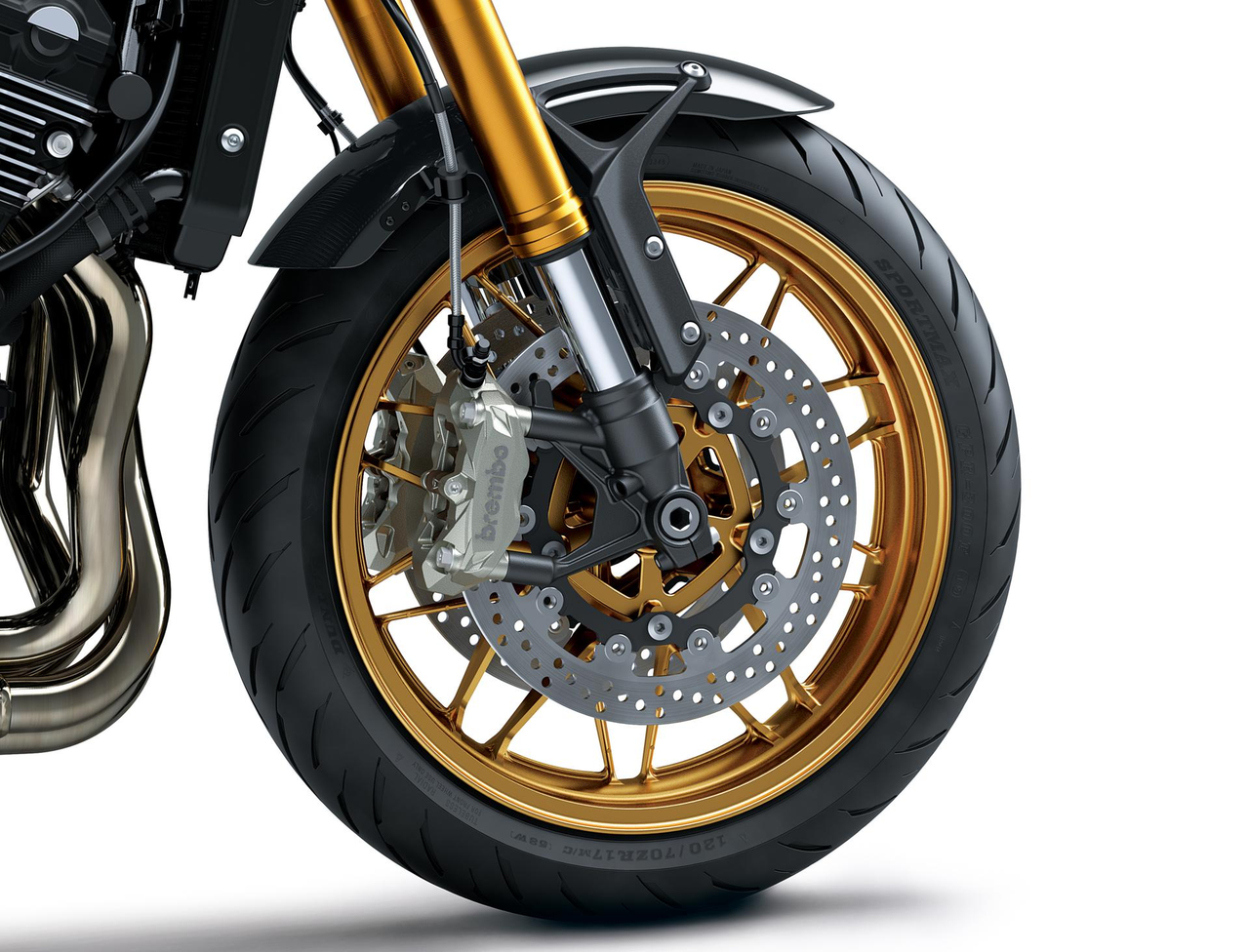
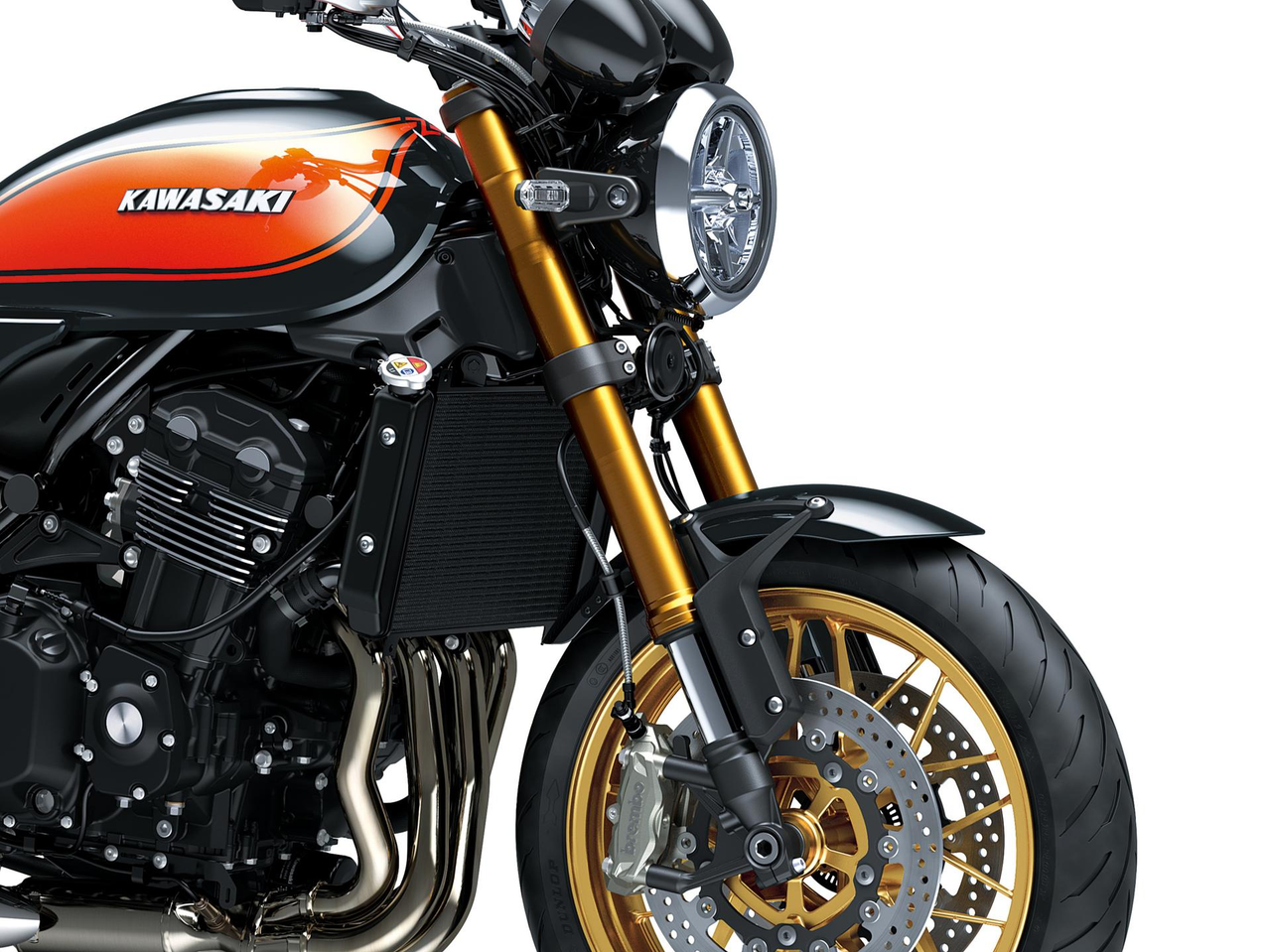
300 mm Brembo front discs, M4.32 radial-mount monobloc calipers and pads, complemented by a smaller-diameter Nissin radial-pump master cylinder (Ø17.5 mm, vs Ø19.1 mm on the standard model) and stainless-steel braided lines, deliver greater stopping power and offer a linear progression when operating the lever that facilitates precise control.
Brembo Front Brake
300 mm Brembo front discs, M4.32 radial-mount monobloc calipers and pads, complemented by a smaller-diameter Nissin radial-pump master cylinder (Ø17.5 mm, vs Ø19.1 mm on the standard model) and stainless-steel braided lines, deliver greater stopping power and offer a linear progression when operating the lever that facilitates precise control.
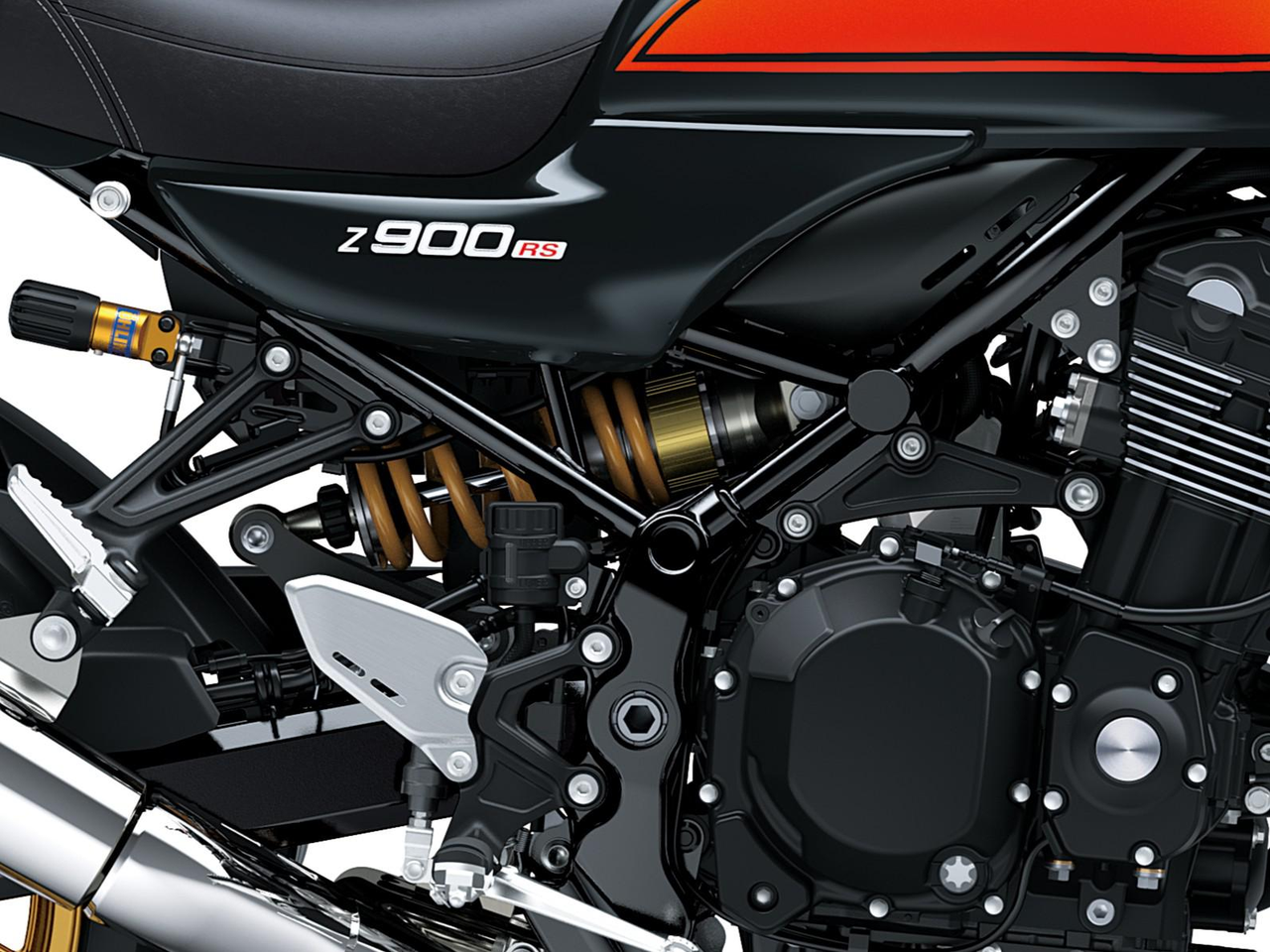
Öhlins S46 Rear Shock
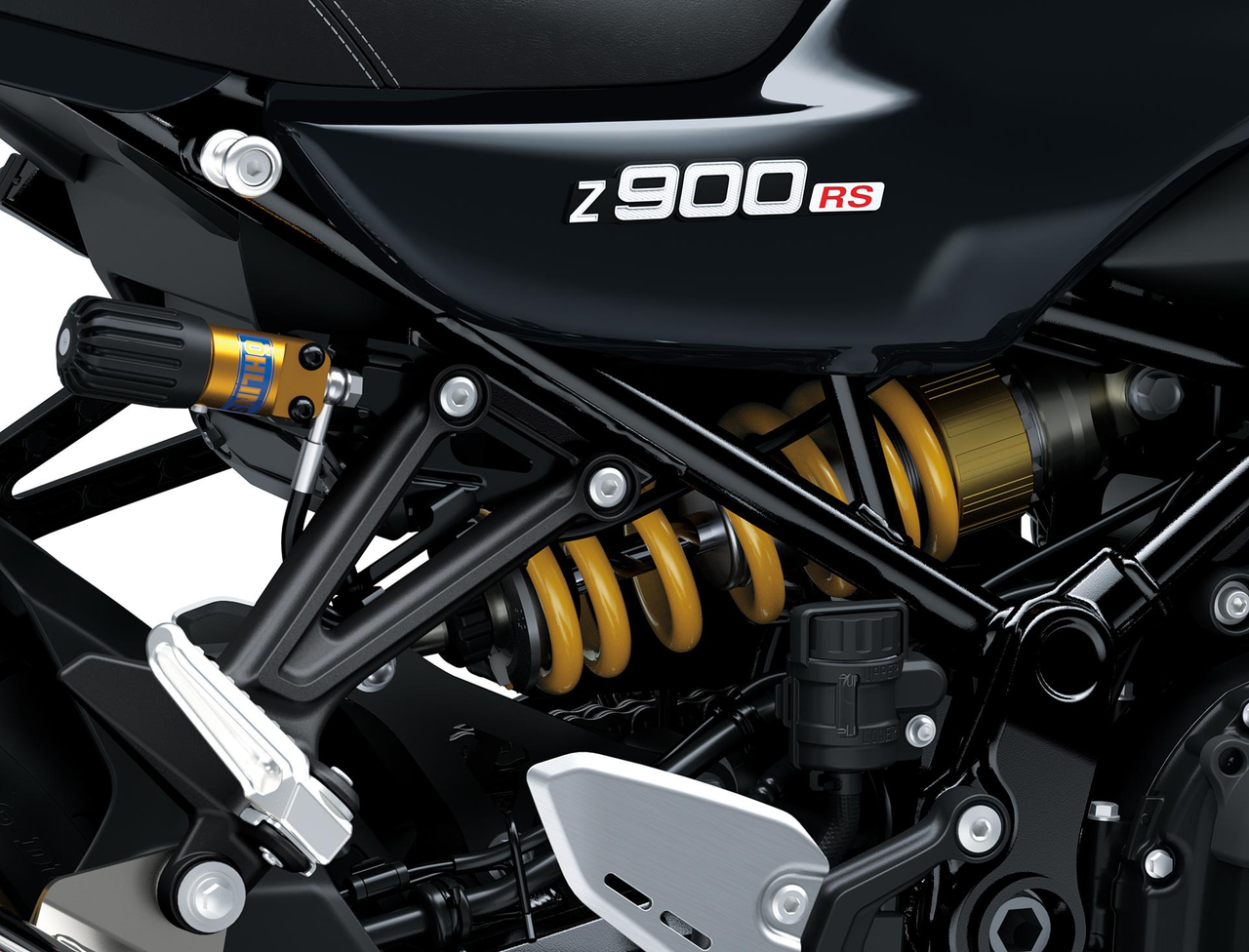
The Öhlins S46 rear shock features an aluminium body with single-tube construction, a large Ø 46 mm piston, and internal oil and gas chambers separated by a floating piston, resulting in a superior sense of grip and handling. Improved action from the Öhlins rear shock also contributes to a suppler ride feel. Unlike its aftermarket counterpart, the Öhlins rear shock prepared for Kawasaki’s Z models features a double-lipped dust seal that offers superior sealing performance.
Öhlins S46 Rear Shock
The Öhlins S46 rear shock features an aluminium body with single-tube construction, a large Ø 46 mm piston, and internal oil and gas chambers separated by a floating piston, resulting in a superior sense of grip and handling. Improved action from the Öhlins rear shock also contributes to a suppler ride feel. Unlike its aftermarket counterpart, the Öhlins rear shock prepared for Kawasaki’s Z models features a double-lipped dust seal that offers superior sealing performance.
Lightweight Trellis Frame
Complementing a light overall weight (noticeable as soon as the bike is lifted off its side-stand), frame rigidity and chassis geometry tuning were selected to deliver light, natural handling. Like the engine, the chassis responds to rider input predictably, going where the rider wants it to without resistance.
Lightweight Trellis Frame
Complementing a light overall weight (noticeable as soon as the bike is lifted off its side-stand), frame rigidity and chassis geometry tuning were selected to deliver light, natural handling. Like the engine, the chassis responds to rider input predictably, going where the rider wants it to without resistance.
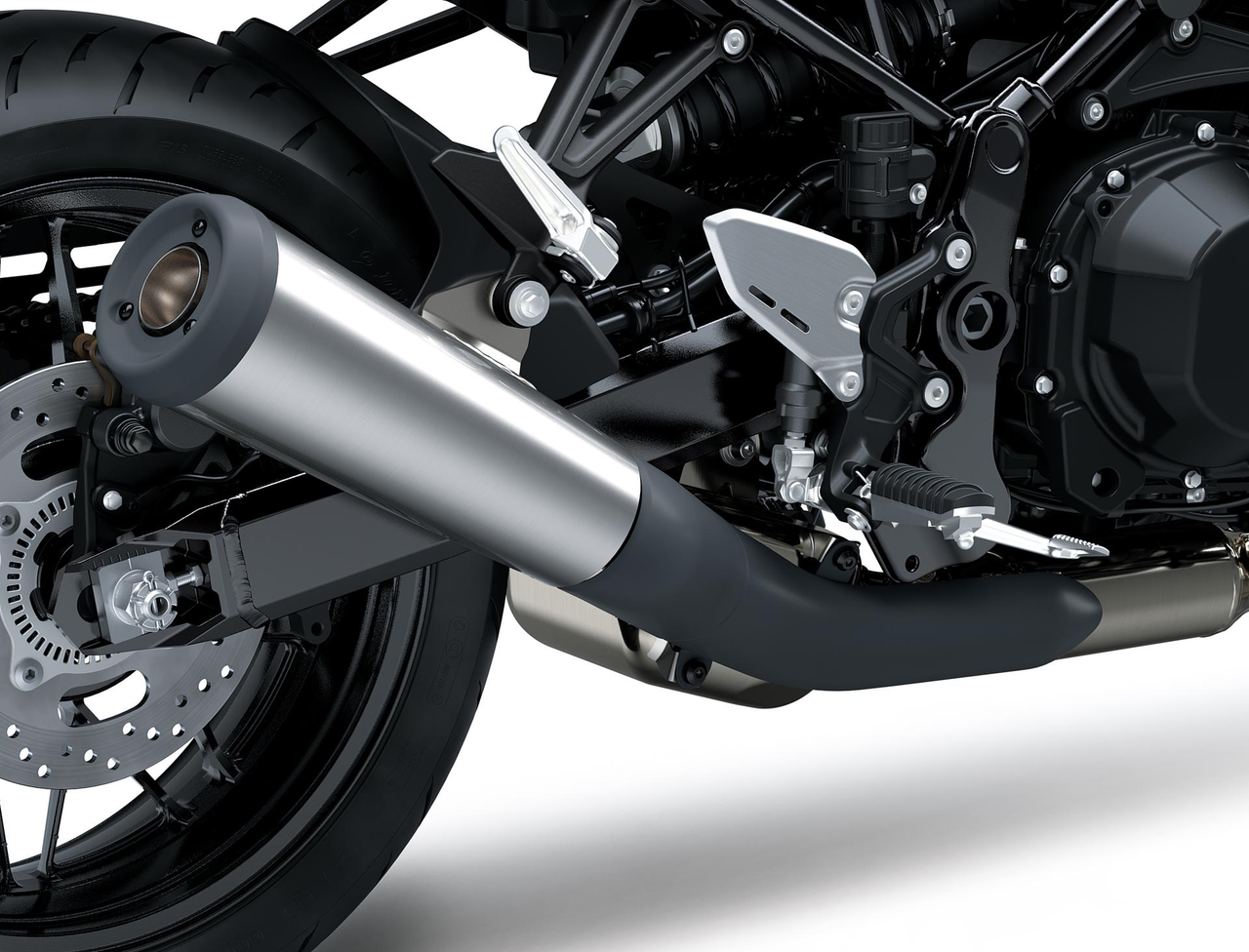
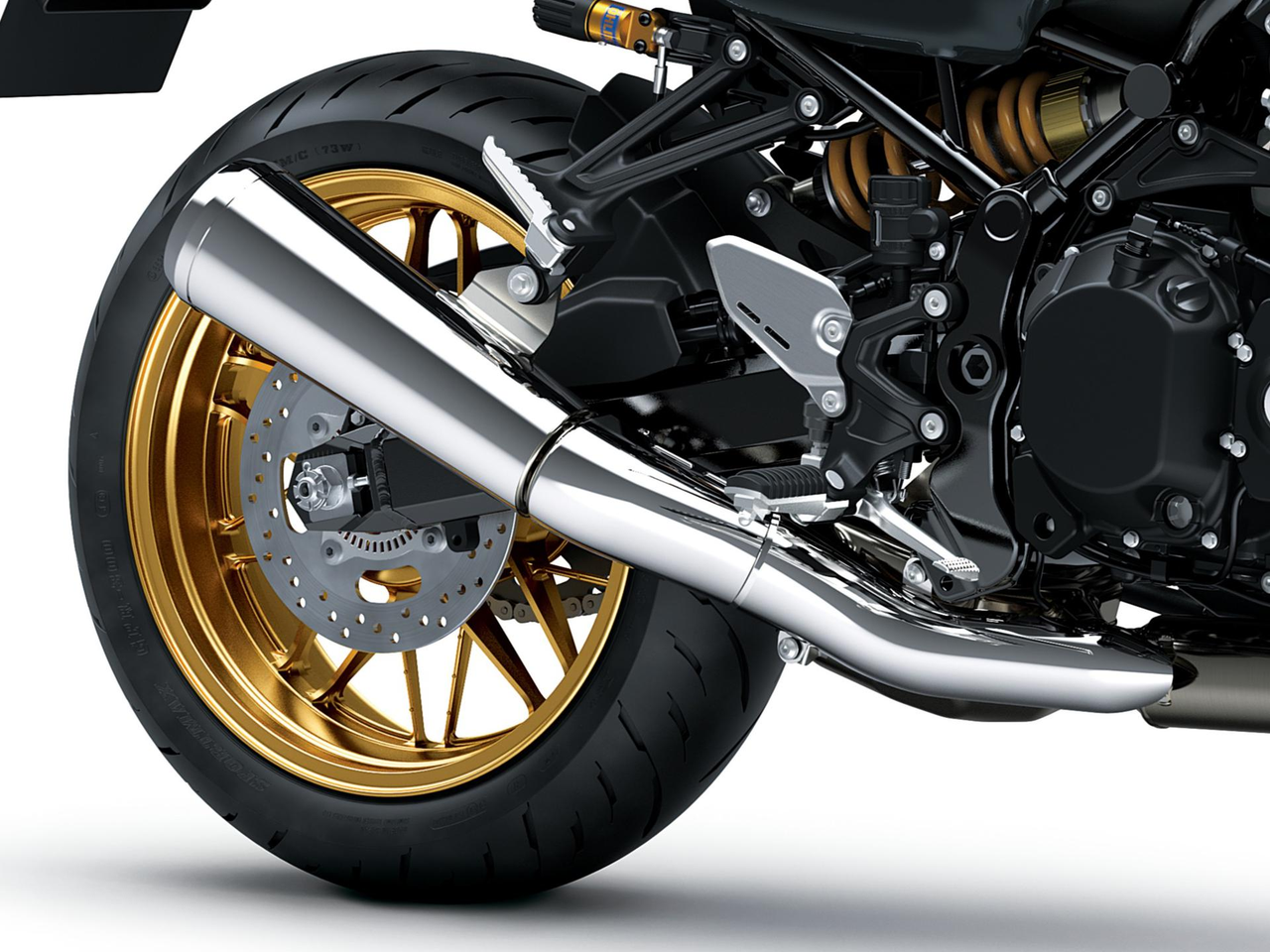
Megaphone-Style Silencer
A sleek, sporty megaphone-style silencer is complemented by a revised end-cap design, further emphasising the bike’s retro sport identity.
Megaphone-Style Silencer
A sleek, sporty megaphone-style silencer is complemented by a revised end-cap design, further emphasising the bike’s retro sport identity.
Tuned Exhaust Note
As with previous models, sound tuning was used to achieve the ideal exhaust note. With the goal of resonating with the rider’s senses, the exhaust sound was carefully engineered to evoke the character of a classic 4-into-1 system. The result is a deep, evocative tone that enhances the riding experience—from the engine’s initial roar at startup to its pulsing idle and rich sound during low-speed cruising.
Tuned Exhaust Note
As with previous models, sound tuning was used to achieve the ideal exhaust note. With the goal of resonating with the rider’s senses, the exhaust sound was carefully engineered to evoke the character of a classic 4-into-1 system. The result is a deep, evocative tone that enhances the riding experience—from the engine’s initial roar at startup to its pulsing idle and rich sound during low-speed cruising.
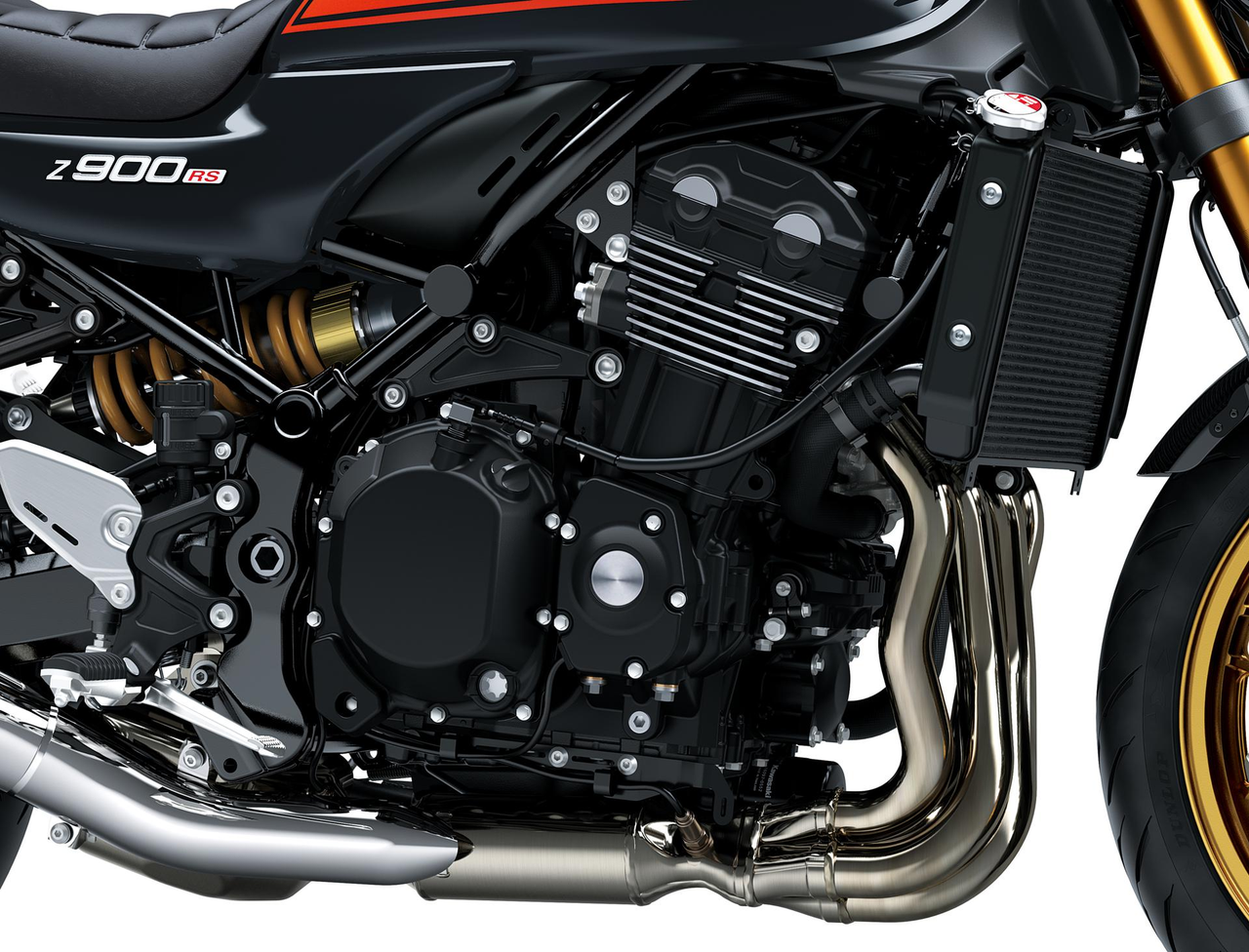
Simple, Uncluttered Engine Design
Stylish fins integrated into the cylinder head create the impression of an air-cooled engine and are further complemented by engine design cues inspired by the original Z1. The engine cover design is reminiscent of traditional naked models, and the use of die-cast aluminium for all covers adds a high-quality, premium finish.
Simple, Uncluttered Engine Design
Stylish fins integrated into the cylinder head create the impression of an air-cooled engine and are further complemented by engine design cues inspired by the original Z1. The engine cover design is reminiscent of traditional naked models, and the use of die-cast aluminium for all covers adds a high-quality, premium finish.
Strong, Smooth In-Line Four Engine with ETV
Like the original Z1, the Z900RS’ 900cc-class In-Line Four engine configuration offers an ideal balance of power and manageability. The engine’s newly equipped electronic throttle valves enhance controllability in the low- to mid-rpm range, where riders spend most of their time. At the same time, increased power in the higher rpm range further sharpens the bike’s fun-to-ride character.
Strong, Smooth In-Line Four Engine with ETV
Like the original Z1, the Z900RS’ 900cc-class In-Line Four engine configuration offers an ideal balance of power and manageability. The engine’s newly equipped electronic throttle valves enhance controllability in the low- to mid-rpm range, where riders spend most of their time. At the same time, increased power in the higher rpm range further sharpens the bike’s fun-to-ride character.
Z1-Inspired Styling
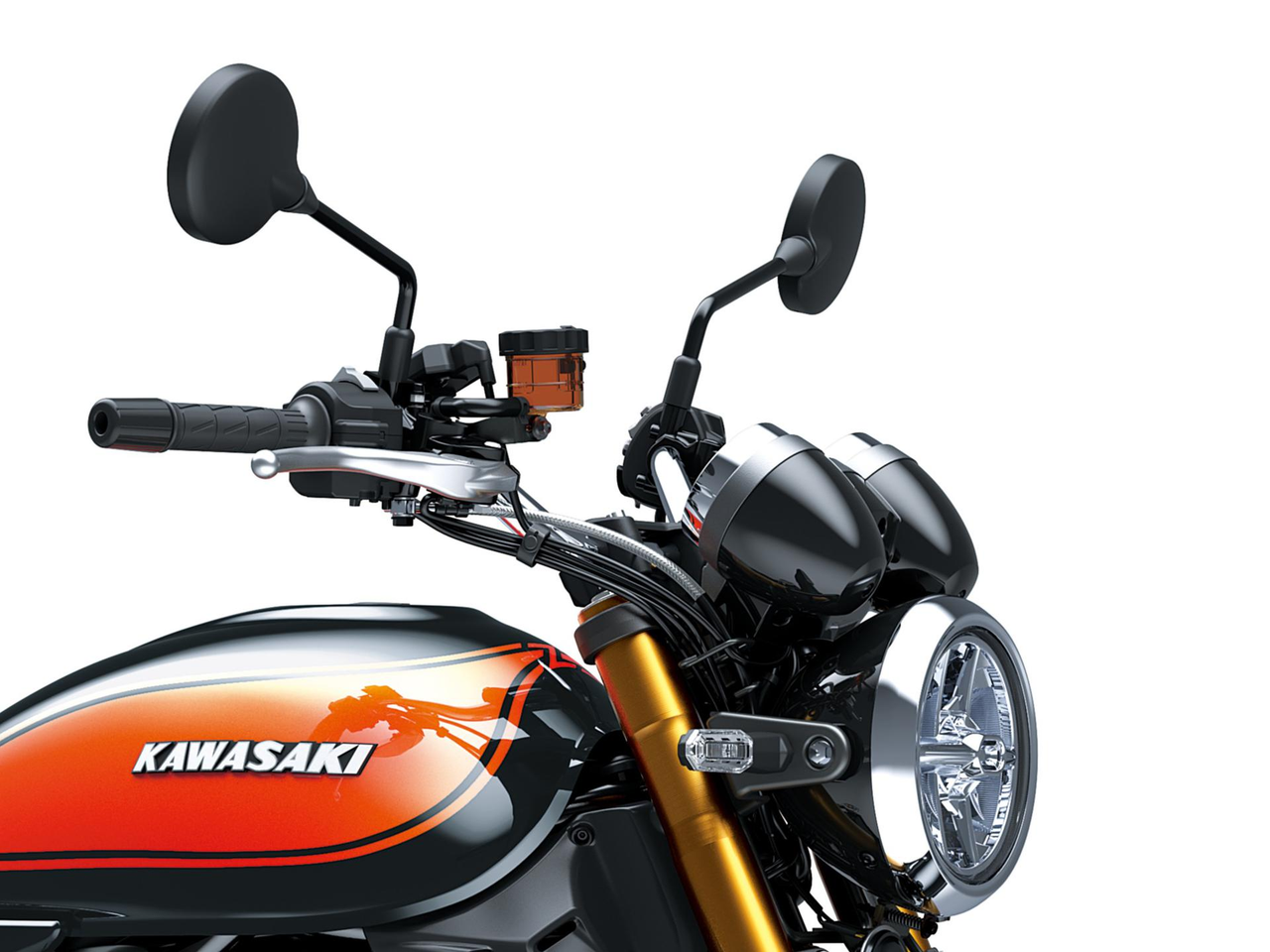
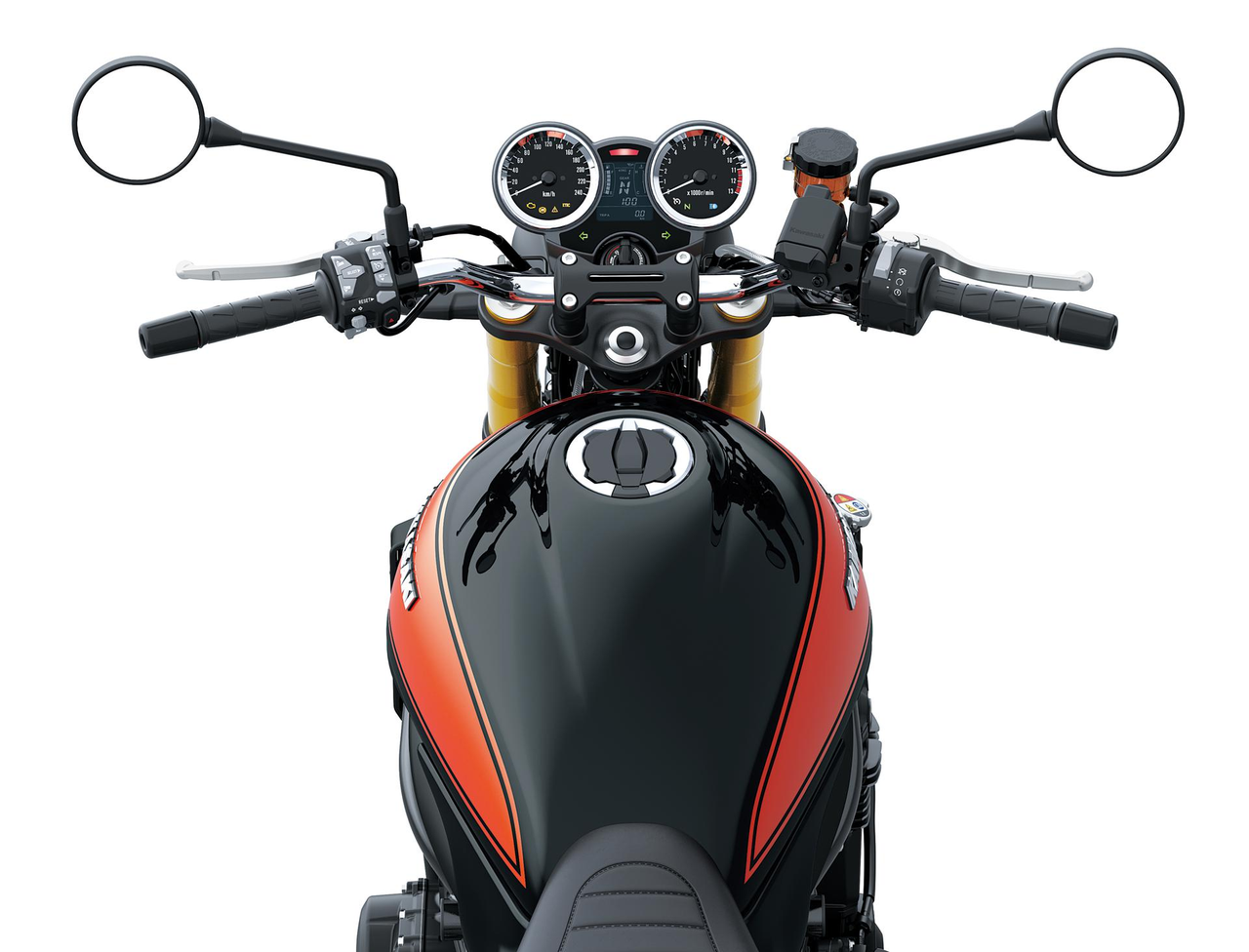
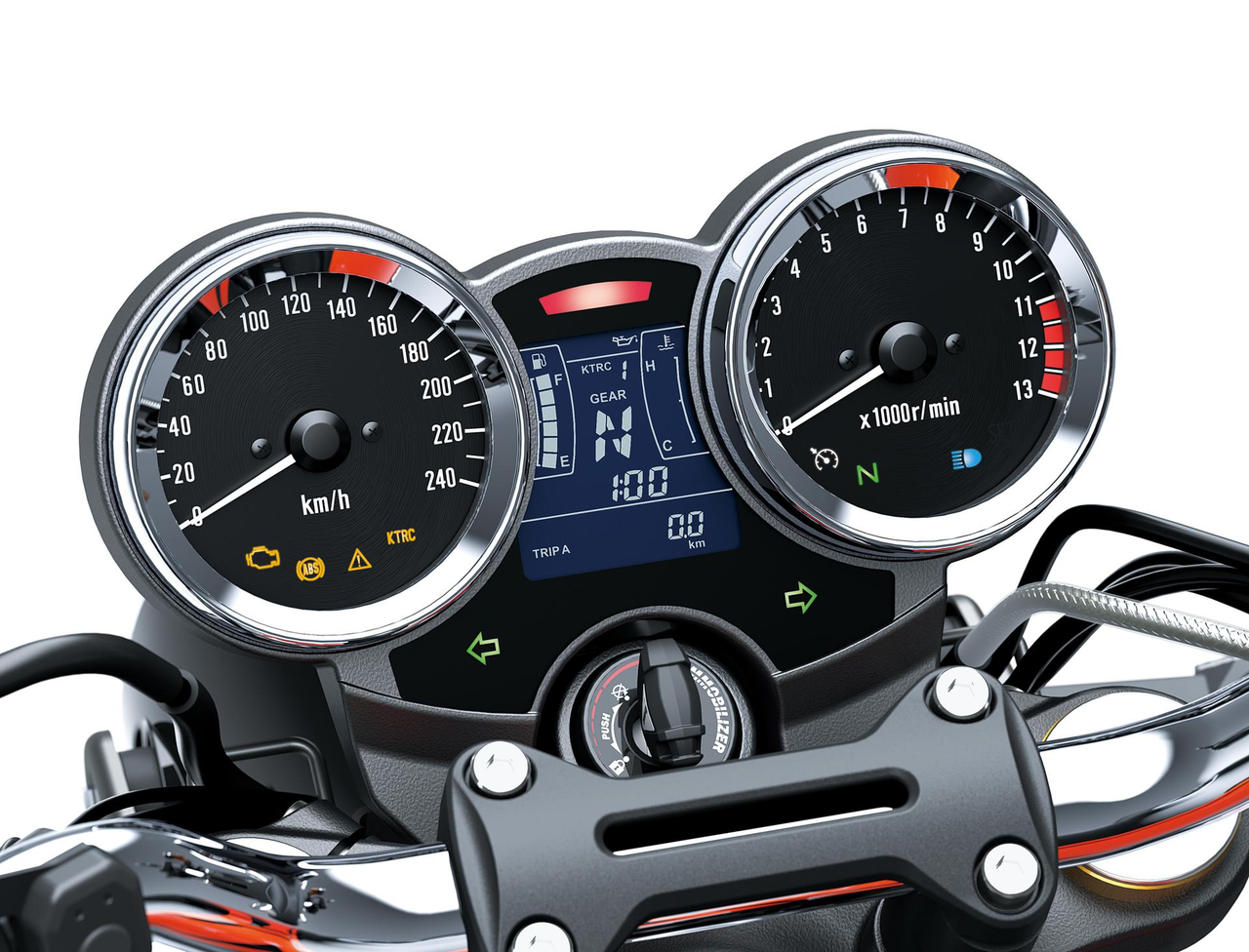
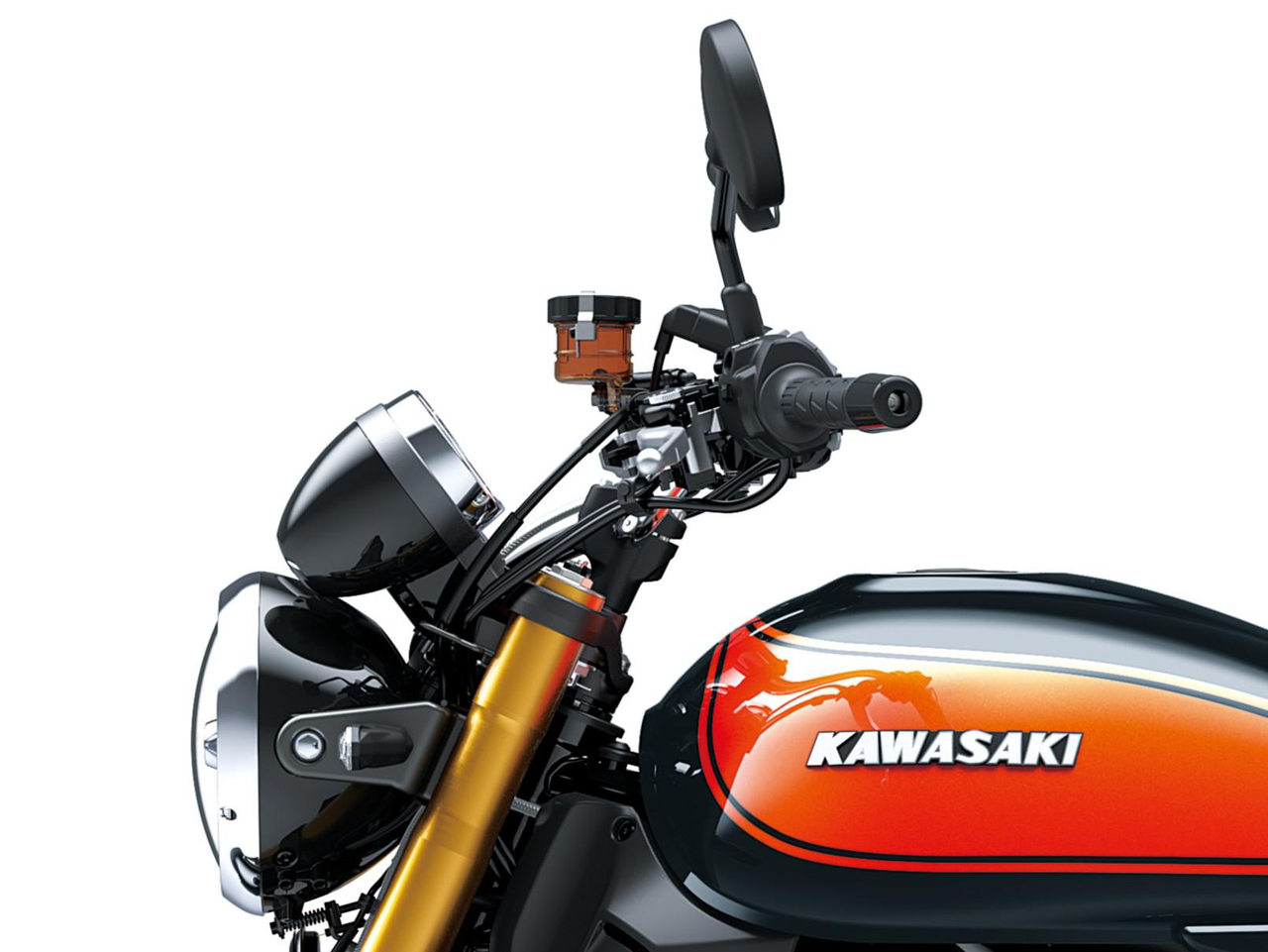
The elegantly sculpted teardrop-style fuel tank at the heart of the design draws inspiration from the iconic Z1. Echoing the Z1’s distinctive tail design, the tail cowl contributes to a sleek side profile that flows smoothly from the seat to the end of the tail. Further tribute is paid through details like the round LED headlamp, dual-dial instrumentation, and oval LED taillight—all carefully crafted elements that honour the original Z1’s timeless appeal.
Z1-Inspired Styling
The elegantly sculpted teardrop-style fuel tank at the heart of the design draws inspiration from the iconic Z1. Echoing the Z1’s distinctive tail design, the tail cowl contributes to a sleek side profile that flows smoothly from the seat to the end of the tail. Further tribute is paid through details like the round LED headlamp, dual-dial instrumentation, and oval LED taillight—all carefully crafted elements that honour the original Z1’s timeless appeal.
Relaxed Riding Position
Whether riding through the city or exploring hilly terrain, the upright and relaxed riding position of the Z900RS offers both comfort and control. On models equipped with the Low Seat, a newly designed narrow handlebar better accommodates smaller riders, enhancing overall manageability.
Relaxed Riding Position
Whether riding through the city or exploring hilly terrain, the upright and relaxed riding position of the Z900RS offers both comfort and control. On models equipped with the Low Seat, a newly designed narrow handlebar better accommodates smaller riders, enhancing overall manageability.
IMU-Equipped Electronic Riding Support Technology
Kawasaki’s highly sophisticated electronic management systems offer rider support to allow riders to more fully experience how the Z900RS is fun and rewarding to control. IMU feedback adds greater precision to the ABS.
IMU-Equipped Electronic Riding Support Technology
Kawasaki’s highly sophisticated electronic management systems offer rider support to allow riders to more fully experience how the Z900RS is fun and rewarding to control. IMU feedback adds greater precision to the ABS.
Smartphone Connectivity via RIDEOLOGY THE APP MOTORCYCLE
Smartphone connectivity lets riders connect to their machine wirelessly for an enhanced motorcycling experience.
Smartphone Connectivity via RIDEOLOGY THE APP MOTORCYCLE
Smartphone connectivity lets riders connect to their machine wirelessly for an enhanced motorcycling experience.
Electronic Cruise Control
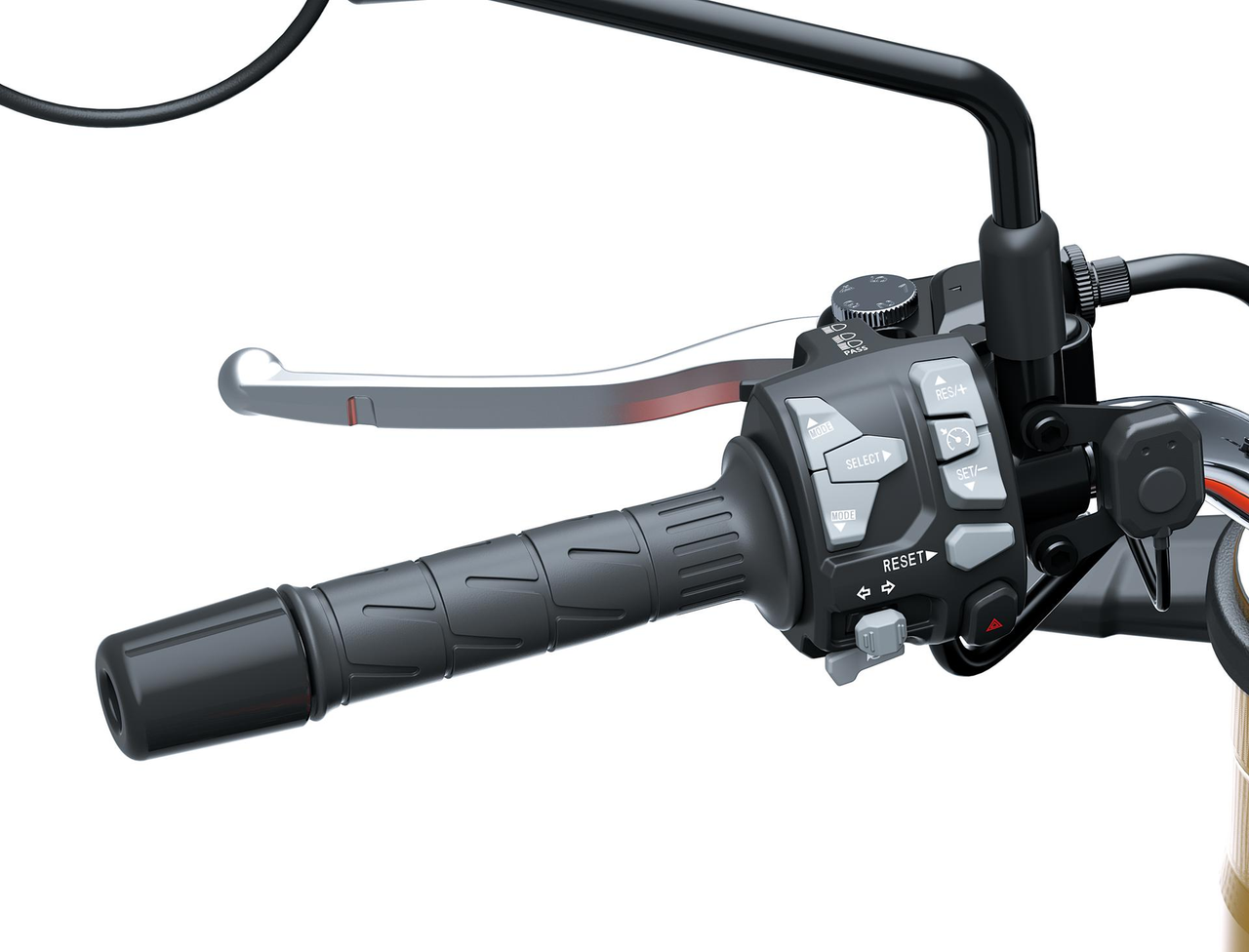
With the push of a button, riders are able to easily maintain a set speed, making highway cruising even more comfortable.
Electronic Cruise Control
With the push of a button, riders are able to easily maintain a set speed, making highway cruising even more comfortable.
High Level of Sporty Riding Potential
The Z900RS’ suspension and brake components are on par with those of a modern supersport model. A Ø 41 mm inverted fork with adjustable damping and Horizontal Back-link rear suspension contribute to both a comfortable ride and sporty performance. Radial mount front brakes deliver a linear brake feel with excellent controllability.
High Level of Sporty Riding Potential
The Z900RS’ suspension and brake components are on par with those of a modern supersport model. A Ø 41 mm inverted fork with adjustable damping and Horizontal Back-link rear suspension contribute to both a comfortable ride and sporty performance. Radial mount front brakes deliver a linear brake feel with excellent controllability.
KQS (Kawasaki Quick Shifter)
Allowing riders to take even greater advantage of the Z900RS’ exhilarating engine character, the quick shifter enables clutchless upshifts and downshifts for seamless acceleration and easy deceleration.
KQS (Kawasaki Quick Shifter)
Allowing riders to take even greater advantage of the Z900RS’ exhilarating engine character, the quick shifter enables clutchless upshifts and downshifts for seamless acceleration and easy deceleration.

- Timeless Styling
- Synchronous Ride Feel
- Modern Electronics Package
- Brembo Front Brake
- Öhlins S46 Rear Shock
- Lightweight Trellis Frame
- Megaphone-Style Silencer
- Tuned Exhaust Note
- Simple, Uncluttered Engine Design
- Strong, Smooth In-Line Four Engine with ETV
- Z1-Inspired Styling
- Relaxed Riding Position
- IMU-Equipped Electronic Riding Support Technology
- Smartphone Connectivity via RIDEOLOGY THE APP MOTORCYCLE
- Electronic Cruise Control
- High Level of Sporty Riding Potential
- KQS (Kawasaki Quick Shifter)
Timeless Styling
With a seamless blend of Z1-inspired styling elements and modern craftsmanship—from the iconic teardrop fuel tank to the innovative oval LED taillight—the Z900RS offers timeless good looks with an exquisite attention to detail and superb fit-and-finish that results in a very high-quality appearance. Functional beauty was a priority, with a simple, yet refined design pursued.
Timeless Styling
With a seamless blend of Z1-inspired styling elements and modern craftsmanship—from the iconic teardrop fuel tank to the innovative oval LED taillight—the Z900RS offers timeless good looks with an exquisite attention to detail and superb fit-and-finish that results in a very high-quality appearance. Functional beauty was a priority, with a simple, yet refined design pursued.
Synchronous Ride Feel
Thanks to its smooth In-Line Four, and unhurried handling care of its lightweight trellis frame, the ride feel of the Z900RS is unique in the retro category. Both engine and chassis response were carefully designed to not be too quick, making it easier to feel at one with the bike. The resultant stress-free riding is complemented by a crafted exhaust note that enriches the riding experience from the time the rider thumbs the ignition—features that will enable riders to enjoy their machine for many long years. The Z900RS’ refined character is reminiscent of the legendary Kawasaki bikes of yesteryear.
Synchronous Ride Feel
Thanks to its smooth In-Line Four, and unhurried handling care of its lightweight trellis frame, the ride feel of the Z900RS is unique in the retro category. Both engine and chassis response were carefully designed to not be too quick, making it easier to feel at one with the bike. The resultant stress-free riding is complemented by a crafted exhaust note that enriches the riding experience from the time the rider thumbs the ignition—features that will enable riders to enjoy their machine for many long years. The Z900RS’ refined character is reminiscent of the legendary Kawasaki bikes of yesteryear.
Modern Electronics Package
Complementing the Z900RS’ rider-friendly engine and handling performance, an expanded electronic rider support package includes IMU feedback and Kawasaki’s latest dual-direction KQS, as well as comfort-enhancing features like electronic cruise control. Smartphone connectivity further enhances the riding experience, offering greater convenience and enjoyment than ever before.
Modern Electronics Package
Complementing the Z900RS’ rider-friendly engine and handling performance, an expanded electronic rider support package includes IMU feedback and Kawasaki’s latest dual-direction KQS, as well as comfort-enhancing features like electronic cruise control. Smartphone connectivity further enhances the riding experience, offering greater convenience and enjoyment than ever before.
Brembo Front Brake
300 mm Brembo front discs, M4.32 radial-mount monobloc calipers and pads, complemented by a smaller-diameter Nissin radial-pump master cylinder (Ø17.5 mm, vs Ø19.1 mm on the standard model) and stainless-steel braided lines, deliver greater stopping power and offer a linear progression when operating the lever that facilitates precise control.
Brembo Front Brake
300 mm Brembo front discs, M4.32 radial-mount monobloc calipers and pads, complemented by a smaller-diameter Nissin radial-pump master cylinder (Ø17.5 mm, vs Ø19.1 mm on the standard model) and stainless-steel braided lines, deliver greater stopping power and offer a linear progression when operating the lever that facilitates precise control.
Öhlins S46 Rear Shock
The Öhlins S46 rear shock features an aluminium body with single-tube construction, a large Ø 46 mm piston, and internal oil and gas chambers separated by a floating piston, resulting in a superior sense of grip and handling. Improved action from the Öhlins rear shock also contributes to a suppler ride feel. Unlike its aftermarket counterpart, the Öhlins rear shock prepared for Kawasaki’s Z models features a double-lipped dust seal that offers superior sealing performance.
Öhlins S46 Rear Shock
The Öhlins S46 rear shock features an aluminium body with single-tube construction, a large Ø 46 mm piston, and internal oil and gas chambers separated by a floating piston, resulting in a superior sense of grip and handling. Improved action from the Öhlins rear shock also contributes to a suppler ride feel. Unlike its aftermarket counterpart, the Öhlins rear shock prepared for Kawasaki’s Z models features a double-lipped dust seal that offers superior sealing performance.
Lightweight Trellis Frame
Complementing a light overall weight (noticeable as soon as the bike is lifted off its side-stand), frame rigidity and chassis geometry tuning were selected to deliver light, natural handling. Like the engine, the chassis responds to rider input predictably, going where the rider wants it to without resistance.
Lightweight Trellis Frame
Complementing a light overall weight (noticeable as soon as the bike is lifted off its side-stand), frame rigidity and chassis geometry tuning were selected to deliver light, natural handling. Like the engine, the chassis responds to rider input predictably, going where the rider wants it to without resistance.
Megaphone-Style Silencer
A sleek, sporty megaphone-style silencer is complemented by a revised end-cap design, further emphasising the bike’s retro sport identity.
Megaphone-Style Silencer
A sleek, sporty megaphone-style silencer is complemented by a revised end-cap design, further emphasising the bike’s retro sport identity.
Tuned Exhaust Note
As with previous models, sound tuning was used to achieve the ideal exhaust note. With the goal of resonating with the rider’s senses, the exhaust sound was carefully engineered to evoke the character of a classic 4-into-1 system. The result is a deep, evocative tone that enhances the riding experience—from the engine’s initial roar at startup to its pulsing idle and rich sound during low-speed cruising.
Tuned Exhaust Note
As with previous models, sound tuning was used to achieve the ideal exhaust note. With the goal of resonating with the rider’s senses, the exhaust sound was carefully engineered to evoke the character of a classic 4-into-1 system. The result is a deep, evocative tone that enhances the riding experience—from the engine’s initial roar at startup to its pulsing idle and rich sound during low-speed cruising.
Simple, Uncluttered Engine Design
Stylish fins integrated into the cylinder head create the impression of an air-cooled engine and are further complemented by engine design cues inspired by the original Z1. The engine cover design is reminiscent of traditional naked models, and the use of die-cast aluminium for all covers adds a high-quality, premium finish.
Simple, Uncluttered Engine Design
Stylish fins integrated into the cylinder head create the impression of an air-cooled engine and are further complemented by engine design cues inspired by the original Z1. The engine cover design is reminiscent of traditional naked models, and the use of die-cast aluminium for all covers adds a high-quality, premium finish.
Strong, Smooth In-Line Four Engine with ETV
Like the original Z1, the Z900RS’ 900cc-class In-Line Four engine configuration offers an ideal balance of power and manageability. The engine’s newly equipped electronic throttle valves enhance controllability in the low- to mid-rpm range, where riders spend most of their time. At the same time, increased power in the higher rpm range further sharpens the bike’s fun-to-ride character.
Strong, Smooth In-Line Four Engine with ETV
Like the original Z1, the Z900RS’ 900cc-class In-Line Four engine configuration offers an ideal balance of power and manageability. The engine’s newly equipped electronic throttle valves enhance controllability in the low- to mid-rpm range, where riders spend most of their time. At the same time, increased power in the higher rpm range further sharpens the bike’s fun-to-ride character.
Z1-Inspired Styling
The elegantly sculpted teardrop-style fuel tank at the heart of the design draws inspiration from the iconic Z1. Echoing the Z1’s distinctive tail design, the tail cowl contributes to a sleek side profile that flows smoothly from the seat to the end of the tail. Further tribute is paid through details like the round LED headlamp, dual-dial instrumentation, and oval LED taillight—all carefully crafted elements that honour the original Z1’s timeless appeal.
Z1-Inspired Styling
The elegantly sculpted teardrop-style fuel tank at the heart of the design draws inspiration from the iconic Z1. Echoing the Z1’s distinctive tail design, the tail cowl contributes to a sleek side profile that flows smoothly from the seat to the end of the tail. Further tribute is paid through details like the round LED headlamp, dual-dial instrumentation, and oval LED taillight—all carefully crafted elements that honour the original Z1’s timeless appeal.
Relaxed Riding Position
Whether riding through the city or exploring hilly terrain, the upright and relaxed riding position of the Z900RS offers both comfort and control. On models equipped with the Low Seat, a newly designed narrow handlebar better accommodates smaller riders, enhancing overall manageability.
Relaxed Riding Position
Whether riding through the city or exploring hilly terrain, the upright and relaxed riding position of the Z900RS offers both comfort and control. On models equipped with the Low Seat, a newly designed narrow handlebar better accommodates smaller riders, enhancing overall manageability.
IMU-Equipped Electronic Riding Support Technology
Kawasaki’s highly sophisticated electronic management systems offer rider support to allow riders to more fully experience how the Z900RS is fun and rewarding to control. IMU feedback adds greater precision to the ABS.
IMU-Equipped Electronic Riding Support Technology
Kawasaki’s highly sophisticated electronic management systems offer rider support to allow riders to more fully experience how the Z900RS is fun and rewarding to control. IMU feedback adds greater precision to the ABS.
Smartphone Connectivity via RIDEOLOGY THE APP MOTORCYCLE
Smartphone connectivity lets riders connect to their machine wirelessly for an enhanced motorcycling experience.
Smartphone Connectivity via RIDEOLOGY THE APP MOTORCYCLE
Smartphone connectivity lets riders connect to their machine wirelessly for an enhanced motorcycling experience.
Electronic Cruise Control
With the push of a button, riders are able to easily maintain a set speed, making highway cruising even more comfortable.
Electronic Cruise Control
With the push of a button, riders are able to easily maintain a set speed, making highway cruising even more comfortable.
High Level of Sporty Riding Potential
The Z900RS’ suspension and brake components are on par with those of a modern supersport model. A Ø 41 mm inverted fork with adjustable damping and Horizontal Back-link rear suspension contribute to both a comfortable ride and sporty performance. Radial mount front brakes deliver a linear brake feel with excellent controllability.
High Level of Sporty Riding Potential
The Z900RS’ suspension and brake components are on par with those of a modern supersport model. A Ø 41 mm inverted fork with adjustable damping and Horizontal Back-link rear suspension contribute to both a comfortable ride and sporty performance. Radial mount front brakes deliver a linear brake feel with excellent controllability.
KQS (Kawasaki Quick Shifter)
Allowing riders to take even greater advantage of the Z900RS’ exhilarating engine character, the quick shifter enables clutchless upshifts and downshifts for seamless acceleration and easy deceleration.
KQS (Kawasaki Quick Shifter)
Allowing riders to take even greater advantage of the Z900RS’ exhilarating engine character, the quick shifter enables clutchless upshifts and downshifts for seamless acceleration and easy deceleration.

KCMF - Kawasaki Cornering Management Function)
KCMF (Kawasaki Cornering Management Function) monitors engine and chassis parameters throughout the corner.
KCMF - Kawasaki Cornering Management Function)
KCMF monitors engine and chassis parameters throughout the corner from entry, through the apex, to corner exit modulating brake force and engine power to facilitate smooth transition from acceleration to braking and back again, and to assist riders in tracing their intended line through the corner. KCMF oversees the following systems (where available): KTRC (including traction, wheelie and sliding control), KIBS (including pitching control), Kawasaki Engine Brake Control
IMU - Inertial Measurement Unit
Combined with Kawasaki’s proprietary dynamic modelling program, input from the IMU (Inertial Measurement Unit) enables even more precise chassis orientation awareness, the key to bringing Kawasaki’s electronics to the next level.
IMU - Inertial Measurement Unit
IMU means Enhanced Chassis Orientation Awareness. The strength of Kawasaki's cutting-edge electronics has always been the highly sophisticated programming that, using minimal hardware, gives the ECU an accurate real-time picture of what the chassis is doing. Kawasaki's proprietary dynamic modelling program makes skillful use of the magic formula tyre model as it examines changes in multiple parameters, enabling it to take into account changing road and tyre conditions. The addition of an IMU (Inertial Measurement Unit) enables inertia along 6 DOF (degrees of freedom) to be monitored. Acceleration along longitudinal, transverse and vertical axes, plus roll rate and pitch rate are measured. The yaw rate is calculated by the ECU. This additional feedback contributes to an even clearer real-time picture of chassis orientation, enabling even more precise management for control at the limit. With the addition of the IMU and the latest evolution of Kawasaki's advanced modelling software, Kawasaki's electronic engine and chassis management technology takes the step to the next level changing from setting-type and reaction-type systems to feedback-type systems to deliver even greater levels of riding excitement.
KTRC (3-mode)
3-Mode KTRC (Kawasaki TRaction Control), Kawasaki's most advanced traction control system, offers a selection of modes to suit a variety of riding situations, from sport riding to touring.
KTRC (3-mode)
3-mode KTRC combines the traction control technology of both 1-mode KTRC, which provides enhanced stability in slippery situations by preventing wheel slip, and S-KTRC, which helps maintain optimum traction in sport riding situations by predicting the rear wheel slip ratio during acceleration, into a single system. The convenient handle switch allows the type of traction control to be changed instantly by selecting one of the three modes, even while riding. Modes 1 and 2 maintain optimum traction during cornering, like S-KTRC. Designed with sport riding in mind, they enable sharp acceleration out of corners by maximizing forward drive from the rear wheel. Modes 1 and 2 differ in the amount that they intervene. Mode 1, set for dry, good-grip road conditions, maintains the ideal slip ratio to ensure optimum traction. Mode 3 operates like 1-mode KTRC, reducing power to allow grip to be regained when rear wheel spin is detected. It is ideal when riding in slippery conditions or in the wet. Enabling riders to easily change traction control character, 3-mode KTRC is Kawasaki's most advanced engine management system.
KQS - Kawasaki Quick Shifter
Designed to help riders maximise their acceleration on the circuit by enabling clutchless upshifts with the throttle fully open, KQS detects that the shift lever has been actuated and sends a signal to the ECU to cut ignition so that the next gear can be engaged without having to use the clutch. On models that offer clutchless downshifts, during deceleration the system automatically controls engine speed so that the next lower gear can be selected without operating the clutch.
Assist & Slipper Clutch
Based on racing technology, the Assist & Slipper Clutch acts as both a back-torque limiter and a self-servo mechanism that enables a lighter clutch lever pull.
Assist & Slipper Clutch
Based on feedback from racing activities, the Assist & Slipper Clutch uses two types of cams (an assist cam and a slipper cam) to either drive the clutch hub and operating plate together or apart. Under normal operation, the assist cam functions as a self-servo mechanism, pulling the clutch hub and operating plate together to compress the clutch plates. This allows the total clutch spring load to be reduced, resulting in a lighter clutch lever feel when operating the clutch. When excessive engine braking occurs as a result of quick downshifts (or an accidental downshift) the slipper cam comes into play, forcing the clutch hub and operating plate apart. This relieves pressure on the clutch plates to reduce back-torque and helps prevent the rear tyre from hopping and skidding. This race-style function is particularly useful when sport or track riding.
Electronic Throttle Valves
Electronic Throttle Valves allow the ECU to deliver the ideal amount of fuel and air to the engine.
Electronic Throttle Valves
Kawasaki's fully electronic throttle actuation system enables the ECU to control the volume of both the fuel (via fuel injectors) and the air (via throttle valves) delivered to the engine. Ideal fuel injection and throttle valve position results in smooth, natural engine response and the ideal engine output. The system also makes a significant contribution to reduced emissions. Electronic throttle valves also enable more precise control of electronic engine management systems like S-KTRC and KTRC, and allow the implementation of electronic systems like KLCM, Kawasaki Engine Brake Control, and Electronic Cruise Control.
Electronic Cruise Control
Electronic Cruise Control allows vehicle speed to be fixed. Rider support technology that helps reduce rider fatigue on long trips and contributes to increased touring comfort.
Electronic Cruise Control
Electronic Cruise Control allows a desired speed (engine rpm) to be maintained with the simple press of a button. Once activated, the rider does not have to constantly apply the throttle. This reduces stress on the right hand when travelling long distances, enabling relaxed cruising and contributing to a high level of riding comfort.
Sound Tuning
Sound tuning enhances the exhilaration a Kawasaki motorcycle offers by complementing the sensations the rider feels with a carefully crafted auditory component.
Sound Tuning
Kawasaki has long had a reputation for building great-sounding bikes – a characteristic inherent in Kawasaki’s engine architecture – but it is only recently that effort has been put into crafting a specific auditory experience though careful sound tuning of either the intake or exhaust system.
Designed specifically to allow riders to enjoy their motorcycles aurally as well as physically, the carefully crafted auditory notes can be the key components of the street riding exhilaration offered by models that have benefitted from sound tuning. Sound tuning can include conducting sound research, designing intake and exhaust system components based on acoustic test carried out in a sound room, and careful consideration of every detail of a system’s components to ensure a balance of performance and the desired sound.
Economical Riding Indicator
The Economical Riding Indicator is a mark appearing on the instrument panel to indicate favourable fuel consumption, encouraging fuel efficient riding.
Economical Riding Indicator
Using high-precision electronic control for engine management, Kawasaki models can achieve a high level of fuel efficiency. However, fuel consumption is greatly affected by throttle use, gear selection, and other elements under the rider's control. The Economical Riding Indicator is a function that indicates when current riding conditions are consuming a low amount of fuel. The system continuously monitors fuel consumption, regardless of vehicle speed, engine speed, throttle position and other riding conditions. When fuel consumption is low for a given speed (i.e. fuel efficiency is high), an "ECO" mark appears on the instrument panel's LCD screen. By riding so that the "ECO" mark remains on, fuel consumption can be reduced. While effective vehicle speed and engine speed may vary by model, paying attention to conditions that cause the "ECO" mark to appear can help riders improve their fuel efficiency – a handy way to increase cruising range. Further, keeping fuel consumption low also helps minimise negative impact on the environment.
ABS
ABS (Anti-lock Brake System) ensures stable braking performance by preventing wheel lock during braking.
ABS
Sudden over-application of the brakes, or braking on low-grip surfaces (surfaces with a low coefficient of friction) such as wet asphalt or manhole covers may cause a motorcycle's wheel(s) to lock up and slip. ABS was developed to prevent such incidents. Kawasaki ABS systems are controlled by high precision and highly reliable programming formulated based on thorough testing of numerous riding situations. By ensuring stable braking performance, they offer rider reassurance that contributes to greater riding enjoyment. And to meet the special requirements of certain riders, specialised ABS systems are also available. For example, KIBS (Kawasaki Intelligent anti-lock Brake System) is a high-precision brake system designed specifically for supersport models, enabling sport riding to be enjoyed by a wider range of riders. And by linking the front and rear brakes, K-ACT (Kawasaki Advanced Coactive-braking Technology) ABS provides the confidence to enjoy touring on heavyweight models. Kawasaki is continually working on the development of other advanced ABS systems.
Horizontal Back-link Rear Suspension
Horizontal Back-link Rear Suspension arranges its shock unit horizontally, greatly contributing to efficient use of space and mass centralisation.
Horizontal Back-link Rear Suspension
Compared to Kawasaki's traditional Uni-Trak rear suspension, which mounts the shock unit vertically, with Horizontal Back-link rear suspension, the shock unit is almost horizontal. Kawasaki's original suspension arrangement locates the shock unit very close to the bike's centre of gravity, greatly contributing to mass centralisation. And because there is no linkage or shock unit protruding beneath the swingarm, this frees up space for a larger exhaust pre-chamber (an exhaust expansion chamber situated just upstream of the silencer). With a larger pre-chamber, silencer volume can be reduced, and heavy exhaust components can be concentrated closer to the centre of the bike, further contributing to mass centralisation. The result is greatly improved handling. Another benefit is that the shock unit is placed far away from exhaust heat. Because it is more difficult for heat from the exhaust system to adversely affect suspension oil and gas pressure, suspension performance is more stable. Horizontal Back-link rear suspension offers numerous secondary benefits like this.
ERGO-FIT
ERGO-FIT is an interface system that allows a wide range of riders to feel at one with their machine.
ERGO-FIT
Proper fit is key for rider comfort and control. However, the ideal fit varies from rider to rider, depending on their physical dimensions and riding style. ERGO-FIT is an interface system designed to allow riders to find their ideal riding position. Various points of the chassis interface (the handlebar, footpegs and seat, etc) can be adjusted through a combination of interchangeable parts and parts with adjustable positions. This enables a wide range of riders to find a riding position that offers both comfort and control. Feeling at one with their machine, they will be able to experience how Kawasaki machines are fun and rewarding to ride. *Adjustable parts and their range of adjustability vary by model.
Smartphone Connectivity
Smartphone connectivity contributes to an enhanced motorcycling experience by enabling riders to connect to their motorcycle wirelessly.
Smartphone Connectivity
Clever technology enables riders to connect to their motorcycle wirelessly. Using the smartphone application RIDEOLOGY THE APP a number of instrument functions can be accessed, contributing to an enhanced motorcycling experience. Vehicle information (such as the odometer, fuel gauge, maintenance schedule, etc) can be viewed on the smartphone. Riding logs (varies by model, but may include GPS route, gear position, rpm, and other information) can be viewed on the smartphone. When connected, telephone (call, mail) notices are displayed on the instrument panel. Riders can also make changes to their motorcycle instrument display settings (preferred units, clock and date setting, etc) via the smartphone. And on certain models, it is even possible to check and adjust vehicle settings (such as Rider Mode, electronic rider support features, and payload settings) using the smartphone.
- KCMF - Kawasaki Cornering Management Function)
- IMU - Inertial Measurement Unit
- KTRC (3-mode)
- KQS - Kawasaki Quick Shifter
- Assist & Slipper Clutch
- Electronic Throttle Valves
- Electronic Cruise Control
- Sound Tuning
- Economical Riding Indicator
- ABS
- Horizontal Back-link Rear Suspension
- ERGO-FIT
- Smartphone Connectivity
KCMF - Kawasaki Cornering Management Function)
KCMF (Kawasaki Cornering Management Function) monitors engine and chassis parameters throughout the corner.
KCMF - Kawasaki Cornering Management Function)
KCMF monitors engine and chassis parameters throughout the corner from entry, through the apex, to corner exit modulating brake force and engine power to facilitate smooth transition from acceleration to braking and back again, and to assist riders in tracing their intended line through the corner. KCMF oversees the following systems (where available): KTRC (including traction, wheelie and sliding control), KIBS (including pitching control), Kawasaki Engine Brake Control
IMU - Inertial Measurement Unit
Combined with Kawasaki’s proprietary dynamic modelling program, input from the IMU (Inertial Measurement Unit) enables even more precise chassis orientation awareness, the key to bringing Kawasaki’s electronics to the next level.
IMU - Inertial Measurement Unit
IMU means Enhanced Chassis Orientation Awareness. The strength of Kawasaki's cutting-edge electronics has always been the highly sophisticated programming that, using minimal hardware, gives the ECU an accurate real-time picture of what the chassis is doing. Kawasaki's proprietary dynamic modelling program makes skillful use of the magic formula tyre model as it examines changes in multiple parameters, enabling it to take into account changing road and tyre conditions. The addition of an IMU (Inertial Measurement Unit) enables inertia along 6 DOF (degrees of freedom) to be monitored. Acceleration along longitudinal, transverse and vertical axes, plus roll rate and pitch rate are measured. The yaw rate is calculated by the ECU. This additional feedback contributes to an even clearer real-time picture of chassis orientation, enabling even more precise management for control at the limit. With the addition of the IMU and the latest evolution of Kawasaki's advanced modelling software, Kawasaki's electronic engine and chassis management technology takes the step to the next level changing from setting-type and reaction-type systems to feedback-type systems to deliver even greater levels of riding excitement.
KTRC (3-mode)
3-Mode KTRC (Kawasaki TRaction Control), Kawasaki's most advanced traction control system, offers a selection of modes to suit a variety of riding situations, from sport riding to touring.
KTRC (3-mode)
3-mode KTRC combines the traction control technology of both 1-mode KTRC, which provides enhanced stability in slippery situations by preventing wheel slip, and S-KTRC, which helps maintain optimum traction in sport riding situations by predicting the rear wheel slip ratio during acceleration, into a single system. The convenient handle switch allows the type of traction control to be changed instantly by selecting one of the three modes, even while riding. Modes 1 and 2 maintain optimum traction during cornering, like S-KTRC. Designed with sport riding in mind, they enable sharp acceleration out of corners by maximizing forward drive from the rear wheel. Modes 1 and 2 differ in the amount that they intervene. Mode 1, set for dry, good-grip road conditions, maintains the ideal slip ratio to ensure optimum traction. Mode 3 operates like 1-mode KTRC, reducing power to allow grip to be regained when rear wheel spin is detected. It is ideal when riding in slippery conditions or in the wet. Enabling riders to easily change traction control character, 3-mode KTRC is Kawasaki's most advanced engine management system.
KQS - Kawasaki Quick Shifter
Designed to help riders maximise their acceleration on the circuit by enabling clutchless upshifts with the throttle fully open, KQS detects that the shift lever has been actuated and sends a signal to the ECU to cut ignition so that the next gear can be engaged without having to use the clutch. On models that offer clutchless downshifts, during deceleration the system automatically controls engine speed so that the next lower gear can be selected without operating the clutch.
Assist & Slipper Clutch
Based on racing technology, the Assist & Slipper Clutch acts as both a back-torque limiter and a self-servo mechanism that enables a lighter clutch lever pull.
Assist & Slipper Clutch
Based on feedback from racing activities, the Assist & Slipper Clutch uses two types of cams (an assist cam and a slipper cam) to either drive the clutch hub and operating plate together or apart. Under normal operation, the assist cam functions as a self-servo mechanism, pulling the clutch hub and operating plate together to compress the clutch plates. This allows the total clutch spring load to be reduced, resulting in a lighter clutch lever feel when operating the clutch. When excessive engine braking occurs as a result of quick downshifts (or an accidental downshift) the slipper cam comes into play, forcing the clutch hub and operating plate apart. This relieves pressure on the clutch plates to reduce back-torque and helps prevent the rear tyre from hopping and skidding. This race-style function is particularly useful when sport or track riding.
Electronic Throttle Valves
Electronic Throttle Valves allow the ECU to deliver the ideal amount of fuel and air to the engine.
Electronic Throttle Valves
Kawasaki's fully electronic throttle actuation system enables the ECU to control the volume of both the fuel (via fuel injectors) and the air (via throttle valves) delivered to the engine. Ideal fuel injection and throttle valve position results in smooth, natural engine response and the ideal engine output. The system also makes a significant contribution to reduced emissions. Electronic throttle valves also enable more precise control of electronic engine management systems like S-KTRC and KTRC, and allow the implementation of electronic systems like KLCM, Kawasaki Engine Brake Control, and Electronic Cruise Control.
Electronic Cruise Control
Electronic Cruise Control allows vehicle speed to be fixed. Rider support technology that helps reduce rider fatigue on long trips and contributes to increased touring comfort.
Electronic Cruise Control
Electronic Cruise Control allows a desired speed (engine rpm) to be maintained with the simple press of a button. Once activated, the rider does not have to constantly apply the throttle. This reduces stress on the right hand when travelling long distances, enabling relaxed cruising and contributing to a high level of riding comfort.
Sound Tuning
Sound tuning enhances the exhilaration a Kawasaki motorcycle offers by complementing the sensations the rider feels with a carefully crafted auditory component.
Sound Tuning
Kawasaki has long had a reputation for building great-sounding bikes – a characteristic inherent in Kawasaki’s engine architecture – but it is only recently that effort has been put into crafting a specific auditory experience though careful sound tuning of either the intake or exhaust system.
Designed specifically to allow riders to enjoy their motorcycles aurally as well as physically, the carefully crafted auditory notes can be the key components of the street riding exhilaration offered by models that have benefitted from sound tuning. Sound tuning can include conducting sound research, designing intake and exhaust system components based on acoustic test carried out in a sound room, and careful consideration of every detail of a system’s components to ensure a balance of performance and the desired sound.
Economical Riding Indicator
The Economical Riding Indicator is a mark appearing on the instrument panel to indicate favourable fuel consumption, encouraging fuel efficient riding.
Economical Riding Indicator
Using high-precision electronic control for engine management, Kawasaki models can achieve a high level of fuel efficiency. However, fuel consumption is greatly affected by throttle use, gear selection, and other elements under the rider's control. The Economical Riding Indicator is a function that indicates when current riding conditions are consuming a low amount of fuel. The system continuously monitors fuel consumption, regardless of vehicle speed, engine speed, throttle position and other riding conditions. When fuel consumption is low for a given speed (i.e. fuel efficiency is high), an "ECO" mark appears on the instrument panel's LCD screen. By riding so that the "ECO" mark remains on, fuel consumption can be reduced. While effective vehicle speed and engine speed may vary by model, paying attention to conditions that cause the "ECO" mark to appear can help riders improve their fuel efficiency – a handy way to increase cruising range. Further, keeping fuel consumption low also helps minimise negative impact on the environment.
ABS
ABS (Anti-lock Brake System) ensures stable braking performance by preventing wheel lock during braking.
ABS
Sudden over-application of the brakes, or braking on low-grip surfaces (surfaces with a low coefficient of friction) such as wet asphalt or manhole covers may cause a motorcycle's wheel(s) to lock up and slip. ABS was developed to prevent such incidents. Kawasaki ABS systems are controlled by high precision and highly reliable programming formulated based on thorough testing of numerous riding situations. By ensuring stable braking performance, they offer rider reassurance that contributes to greater riding enjoyment. And to meet the special requirements of certain riders, specialised ABS systems are also available. For example, KIBS (Kawasaki Intelligent anti-lock Brake System) is a high-precision brake system designed specifically for supersport models, enabling sport riding to be enjoyed by a wider range of riders. And by linking the front and rear brakes, K-ACT (Kawasaki Advanced Coactive-braking Technology) ABS provides the confidence to enjoy touring on heavyweight models. Kawasaki is continually working on the development of other advanced ABS systems.
Horizontal Back-link Rear Suspension
Horizontal Back-link Rear Suspension arranges its shock unit horizontally, greatly contributing to efficient use of space and mass centralisation.
Horizontal Back-link Rear Suspension
Compared to Kawasaki's traditional Uni-Trak rear suspension, which mounts the shock unit vertically, with Horizontal Back-link rear suspension, the shock unit is almost horizontal. Kawasaki's original suspension arrangement locates the shock unit very close to the bike's centre of gravity, greatly contributing to mass centralisation. And because there is no linkage or shock unit protruding beneath the swingarm, this frees up space for a larger exhaust pre-chamber (an exhaust expansion chamber situated just upstream of the silencer). With a larger pre-chamber, silencer volume can be reduced, and heavy exhaust components can be concentrated closer to the centre of the bike, further contributing to mass centralisation. The result is greatly improved handling. Another benefit is that the shock unit is placed far away from exhaust heat. Because it is more difficult for heat from the exhaust system to adversely affect suspension oil and gas pressure, suspension performance is more stable. Horizontal Back-link rear suspension offers numerous secondary benefits like this.
ERGO-FIT
ERGO-FIT is an interface system that allows a wide range of riders to feel at one with their machine.
ERGO-FIT
Proper fit is key for rider comfort and control. However, the ideal fit varies from rider to rider, depending on their physical dimensions and riding style. ERGO-FIT is an interface system designed to allow riders to find their ideal riding position. Various points of the chassis interface (the handlebar, footpegs and seat, etc) can be adjusted through a combination of interchangeable parts and parts with adjustable positions. This enables a wide range of riders to find a riding position that offers both comfort and control. Feeling at one with their machine, they will be able to experience how Kawasaki machines are fun and rewarding to ride. *Adjustable parts and their range of adjustability vary by model.
Smartphone Connectivity
Smartphone connectivity contributes to an enhanced motorcycling experience by enabling riders to connect to their motorcycle wirelessly.
Smartphone Connectivity
Clever technology enables riders to connect to their motorcycle wirelessly. Using the smartphone application RIDEOLOGY THE APP a number of instrument functions can be accessed, contributing to an enhanced motorcycling experience. Vehicle information (such as the odometer, fuel gauge, maintenance schedule, etc) can be viewed on the smartphone. Riding logs (varies by model, but may include GPS route, gear position, rpm, and other information) can be viewed on the smartphone. When connected, telephone (call, mail) notices are displayed on the instrument panel. Riders can also make changes to their motorcycle instrument display settings (preferred units, clock and date setting, etc) via the smartphone. And on certain models, it is even possible to check and adjust vehicle settings (such as Rider Mode, electronic rider support features, and payload settings) using the smartphone.
Engine
| Engine Type | Liquid-cooled, 4-stroke, in-line four |
|---|---|
| Compression ratio | 11.8:1 |
| Valve system | DOHC, 16 valves |
| Bore x stroke | 73.4 x 56.0 mm |
| Displacement | 948 cm³ |
| Fuel System | Fuel injection: 36 mm x 4 |
| Lubrication | Forced lubrication, wet sump |
| Starting system | Electric |
| Ignition | Battery & Coil (transistorised ignition) |
Performance & Transmission
| Maximum power | 86.0 kW {117 PS} / 9,300 rpm |
|---|---|
| Maximum torque | 99.5 N•m {10.1 kgf•m} / 7,700 rpm |
| Transmission | 6-speed, return shift |
| Clutch | Wet, multi disc |
| Primary reduction ratio | 1.627 (83/51) |
| Gear ratios 1st | 2.600 (39/15) |
| Gear ratios 2nd | 1.950 (39/20) |
| Gear ratios 3rd | 1.600 (24/15) |
| Gear ratios 4th | 1.389 (25/18) |
| Gear ratios 5th | 1.217 (28/23) |
| Gear ratios 6th | 1.069 (31/29) |
| Final drive | Chain |
| Final reduction ratio | 2.867 (43/15) |
Frame & Dimensions
| Frame type | Tubular diamond, steel |
|---|---|
| Rake | 25.0 ° |
| Trail | 98 mm |
| Wheel travel front | 120 mm |
| Wheel travel rear | 140 mm |
| Tyre, front | 120/70 ZR17 M/C (58W) |
| Tyre, rear | 180/55 ZR17 M/C (73W) |
| L x W x H | 2,100 x 865 x 1,150 mm |
| Steering angle L/R | 35° / 35° |
| Wheel base | 1,465 mm |
| Ground clearance | 140 mm |
| Fuel capacity | 17.0 litres |
| Seat height | 845 mm |
| Curb mass* | 215 kg |
| | *Curb mass includes all necessary materials and fluids to operate correctly, full tank of fuel (more than 90 percent capacity) and tool kit (if supplied). |
| Estimated dry weight** | 196 kg |
| | **Estimated Dry weight does not include all necessary materials and fluids to operate correctly, full tank of fuel (more than 90 percent capacity) and tool kit (if supplied). |
Brakes & Suspension
| Front brake type | Dual semi-floating discs |
|---|---|
| Front brake diameter | Ø 300 mm |
| Rear brake type | Single disc |
| Rear brake diameter | Ø 250 mm |
| Rear brake caliper type | Single-piston |
| Front suspension type | Telescopic fork |
| Rear suspension type | Horizontal Back-link, gas-charged shock with spring preload adjustability |
Inpage Navigation Section: Accessories